Agra is the reason many people make the trip: the Taj Mahal at sunrise, and again at sunset from across the river. Around it are Agra Fort, the inlaid tomb known as the Baby Taj and, on the road to Jaipur, Akbar's red-sandstone city of Fatehpur Sikri. The Taj Mahal is closed on Fridays, so plan your Agra days around it.
Best: Feb–Mar, Oct–Nov
1 night: arrive by the afternoon for the Taj at sunset, see it at sunrise the next morning, then Agra Fort before you drive on
Agra stands on the Yamuna and was one of the great Mughal capitals of the 16th and 17th centuries. Three of its monuments are UNESCO World Heritage Sites: the Taj Mahal, the white-marble tomb Shah Jahan built for his wife Mumtaz Mahal; Agra Fort, the red-sandstone citadel where the Mughal emperors lived and ruled; and Fatehpur Sikri, the city Akbar built about 40 km to the west.
One night is enough for most travellers, and it works best if you arrive by mid-afternoon. Watch the Taj at sunset from Mehtab Bagh across the river, then visit the Taj Mahal itself at sunrise the next morning, the calmest time of day there, before Agra Fort and the drive on. Jaipur is about 240 km away (4–5 hours), with Fatehpur Sikri on the way.
What to see
Sights in Agra
1
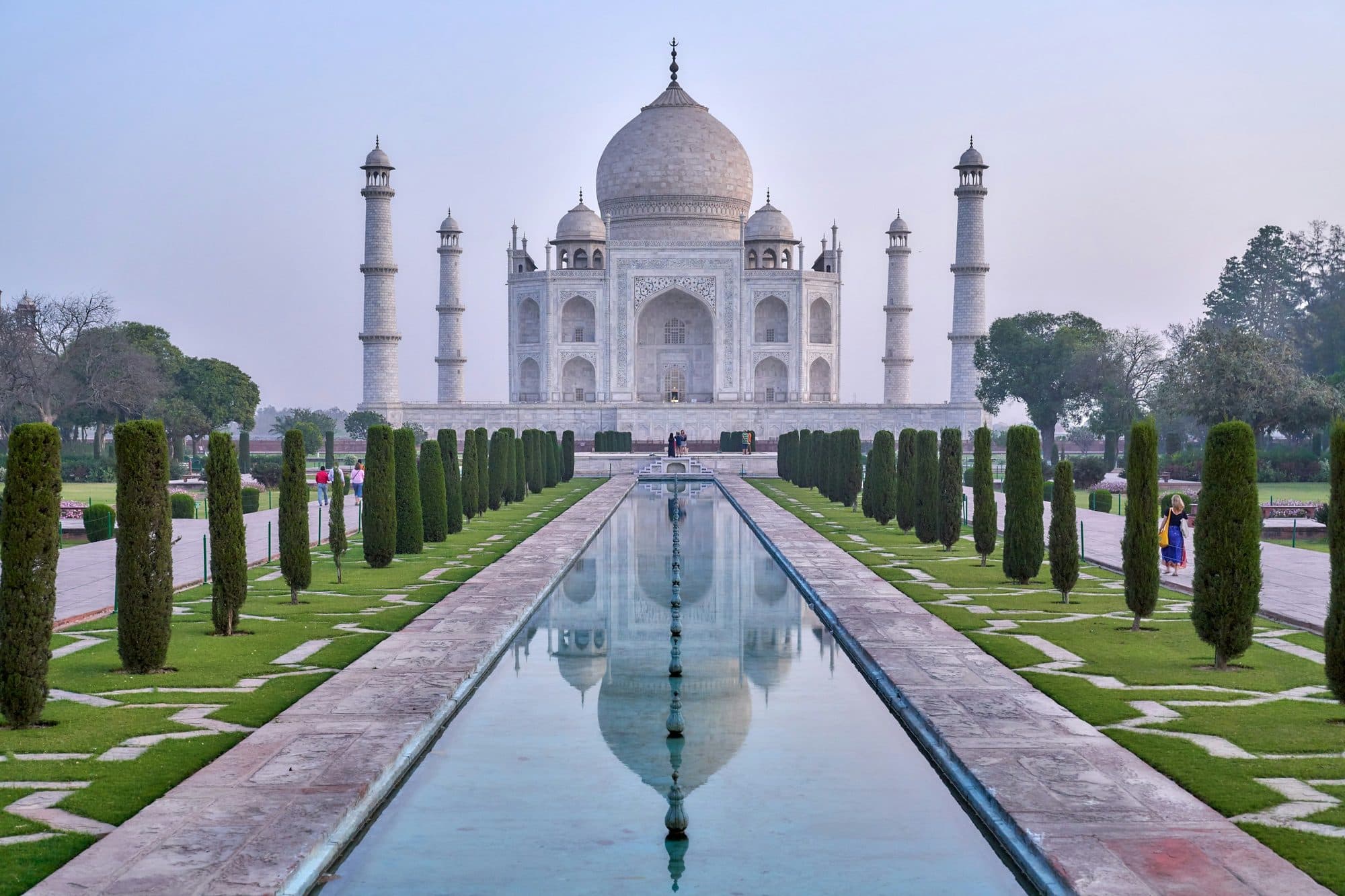
Taj Mahal
The white-marble tomb Shah Jahan built on the bank of the Yamuna for his wife Mumtaz Mahal, who died in 1631; it took about two decades to complete, and it has been a UNESCO World Heritage Site since 1983. Sunrise is the calmest time to visit, and the marble changes colour as the sun comes up. The Taj Mahal is closed on Fridays.
2
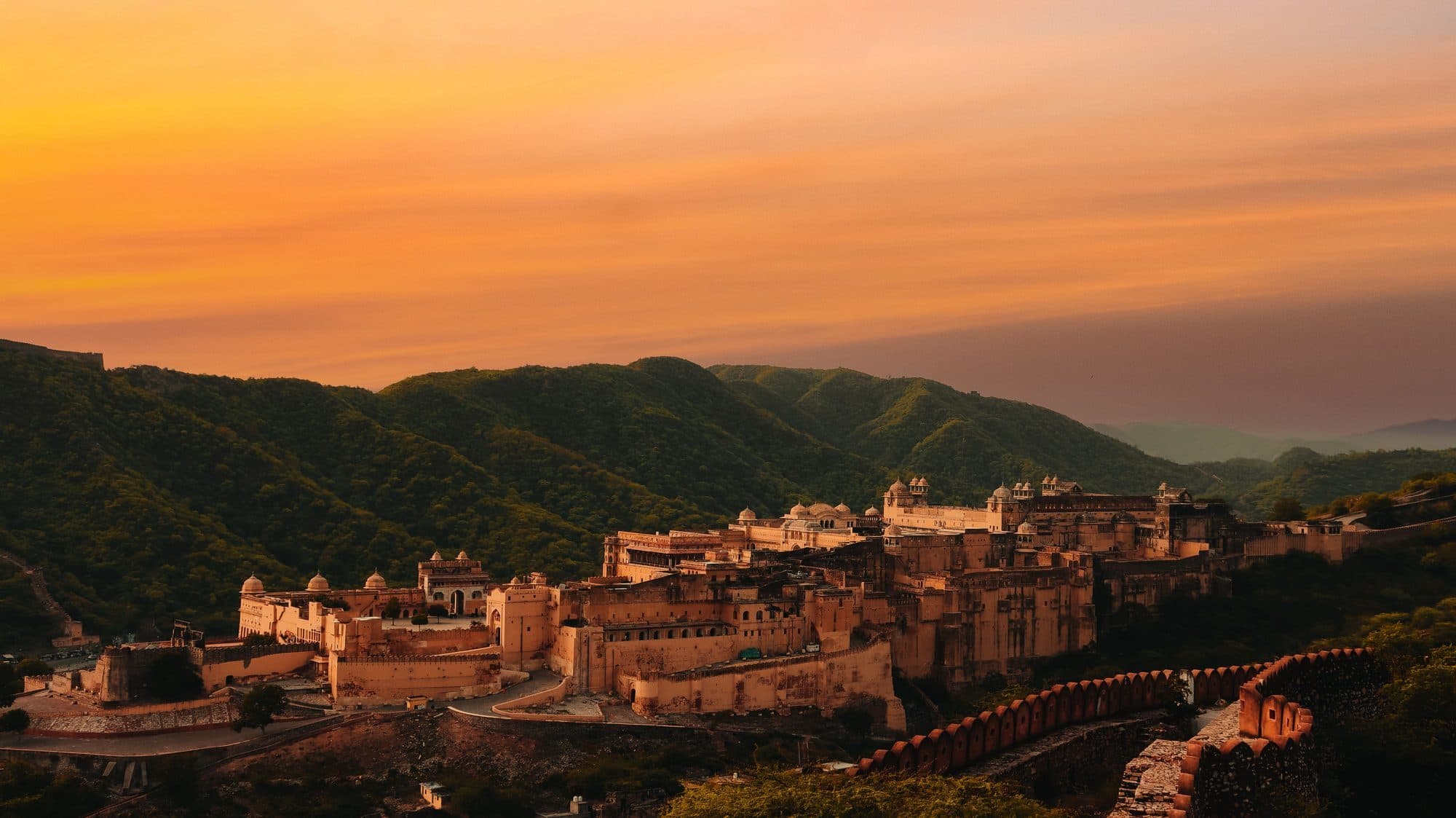
Agra Fort
A red-sandstone fort on the Yamuna, begun by Akbar in 1565, with white-marble palaces added by Shah Jahan. Shah Jahan spent his last years confined here by his son Aurangzeb, and from the riverside terraces you can see the Taj Mahal along the river. It is a UNESCO World Heritage Site.
3
Mehtab Bagh
The moonlight garden: a Mughal garden on the far bank of the Yamuna, directly opposite the Taj Mahal. It is the quiet place to watch the Taj at sunset, and it is usually open on Fridays, when the Taj itself is closed.
4
Itimad-ud-Daulah
Known as the Baby Taj: a small white-marble tomb on the Yamuna, built in the 1620s by the empress Nur Jahan for her father and covered in inlay of coloured stone. It is often described as a draft of the Taj Mahal, and it is usually far quieter.
5
Fatehpur Sikri
The red-sandstone city Akbar built in the 1570s and used as his capital for little more than a decade, about 40 km from Agra on the road to Jaipur. See the palaces and courtyards, the great mosque behind the Buland Darwaza gateway, and the white-marble tomb of the Sufi saint Salim Chishti, where visitors tie threads to the screens as they make a wish. It is a UNESCO World Heritage Site.
Things to do
Experiences in Agra
The Taj at sunset and sunrise
Arrive in Agra by the afternoon, watch the Taj change colour at sunset from Mehtab Bagh, and walk through its gates at sunrise the next morning. Seeing it in two lights, from both sides of the river, is the best reason to spend a night in Agra.
Marble inlay, the craft of the Taj
Craftsmen in Agra still inlay white marble with semi-precious stones, the technique used on the Taj Mahal and known locally as parchin kari. Watching them cut and set the stones takes half an hour, and buying is entirely up to you.
Petha and an Agra breakfast
Agra is known for petha, a translucent sweet made from ash gourd, sold plain or flavoured all over the city. For breakfast, try bedai, a fried bread served with spicy potato curry, with hot jalebis on the side.
When to go
JJanuary: good, with caveats
FFebruary: best time
MMarch: best time
AApril: hard: heat, monsoon or closures
MMay: hard: heat, monsoon or closures
JJune: hard: heat, monsoon or closures
JJuly: hard: heat, monsoon or closures
AAugust: hard: heat, monsoon or closures
SSeptember: hard: heat, monsoon or closures
OOctober: best time
NNovember: best time
DDecember: good, with caveats
Best
Good
Hot, wet or closed
October to March is the time for Agra, with clear, mild days in October, November, February and March; December and January mornings are cold and often foggy, which can hide the Taj at sunrise. April to June is very hot, and July to September is the monsoon.
Getting there
By air: Agra has a small airport (AGR) with a few domestic flights; most travellers fly into Delhi's Indira Gandhi International Airport and come on by road or rail.
By rail: Agra Cantt, the main station, is about 2 hours from Delhi on the fastest trains and also has trains to Jaipur.
By road: About 230 km from Delhi by the Yamuna Expressway (3.5–4 hours) and about 240 km from Jaipur (4–5 hours).
Local knowledge
Tips for Agra
Fridays and opening hours
The Taj Mahal is closed on Fridays. On other days it usually opens about half an hour before sunrise and closes about half an hour before sunset; check current timings before you go. Agra Fort, Mehtab Bagh and the Baby Taj are usually open on Fridays.
Travel light to the Taj
Petrol and diesel vehicles are not allowed close to the Taj, so your car stops at a parking area and you go on by battery-powered cart or on foot. Security at the gates is strict, and food, tripods and large bags are not allowed inside, so carry only a small bag.
Winter fog
In December and January, fog can hide the Taj at sunrise. If you visit then, keep the morning flexible: when the fog lingers, going in an hour or two later, once it lifts, may show you more.
Schematic map: places are shown at their real positions; borders and coastlines are not drawn.
No. The Taj Mahal is closed to visitors every Friday, when the mosque in its grounds is used for Friday prayers. On a Friday you can still see the Taj from Mehtab Bagh across the Yamuna or from Agra Fort, which are usually open.
What is the best time of day to visit the Taj Mahal?
Sunrise is the calmest time to visit the Taj Mahal: it usually opens about half an hour before sunrise, the light is soft and the grounds are at their least crowded. For sunset, the view from Mehtab Bagh, across the river, is quieter than the Taj itself.
How many days do you need in Agra?
One night in Agra is enough for most travellers: arrive by the afternoon for the Taj Mahal at sunset from Mehtab Bagh, visit the Taj at sunrise the next morning, then see Agra Fort and drive on, stopping at Fatehpur Sikri on the way to Jaipur.
Can you visit Agra as a day trip from Delhi?
Yes, Agra can be a long day trip from Delhi: about 230 km each way by the Yamuna Expressway, or about 2 hours each way on the fastest trains. A night in Agra is more relaxed and lets you see the Taj Mahal at both sunset and sunrise.
How far is Fatehpur Sikri from Agra?
Fatehpur Sikri is about 40 km from Agra, roughly an hour by road, on the way to Jaipur, so most travellers see it on the drive between the two cities. Allow about two hours for the palaces, the great mosque and the tomb of Salim Chishti.