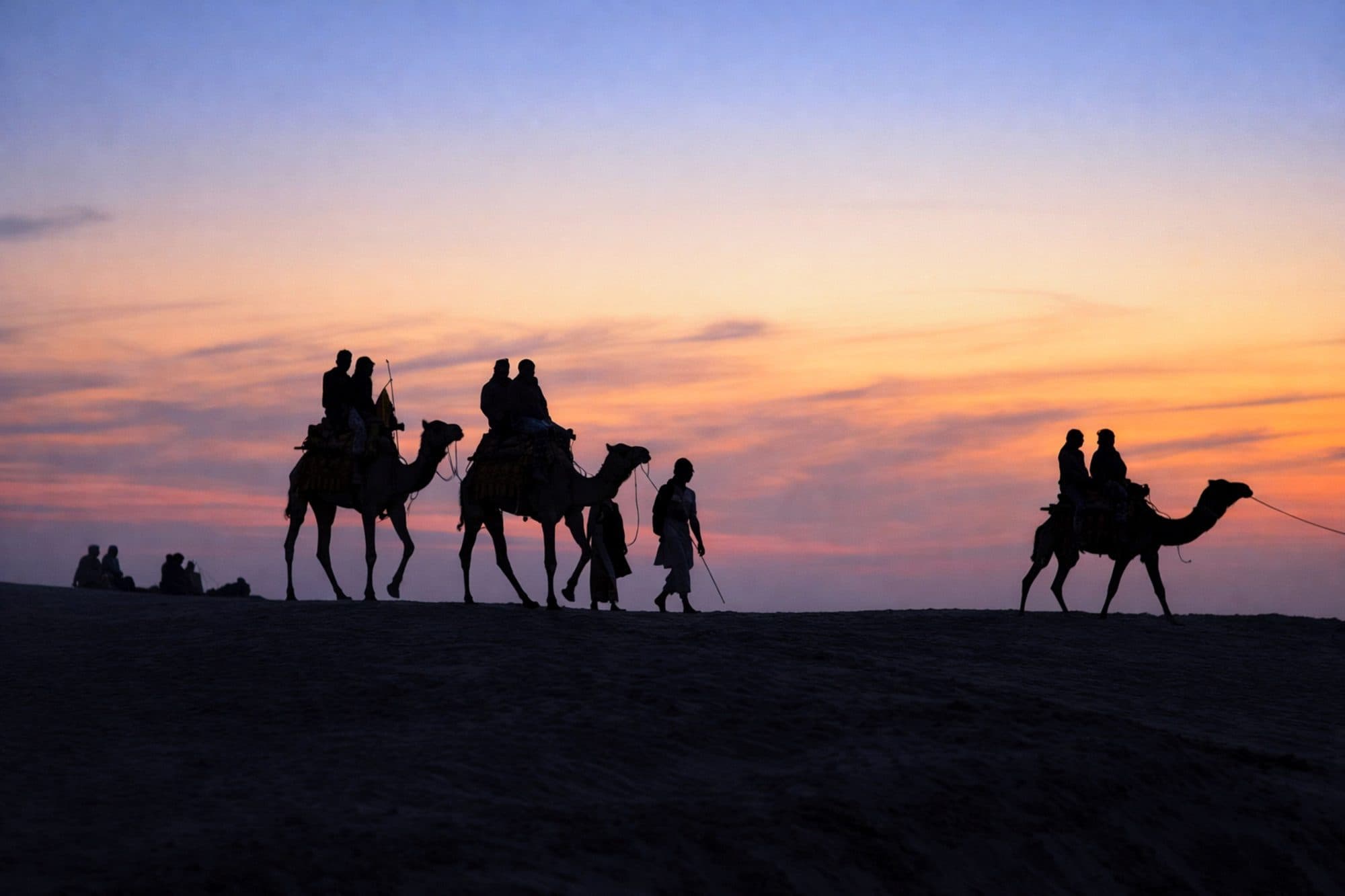
At Karni Mata
Shoes come off at the gate and rats run freely across the floors, so wear socks you don't mind leaving behind and move slowly.
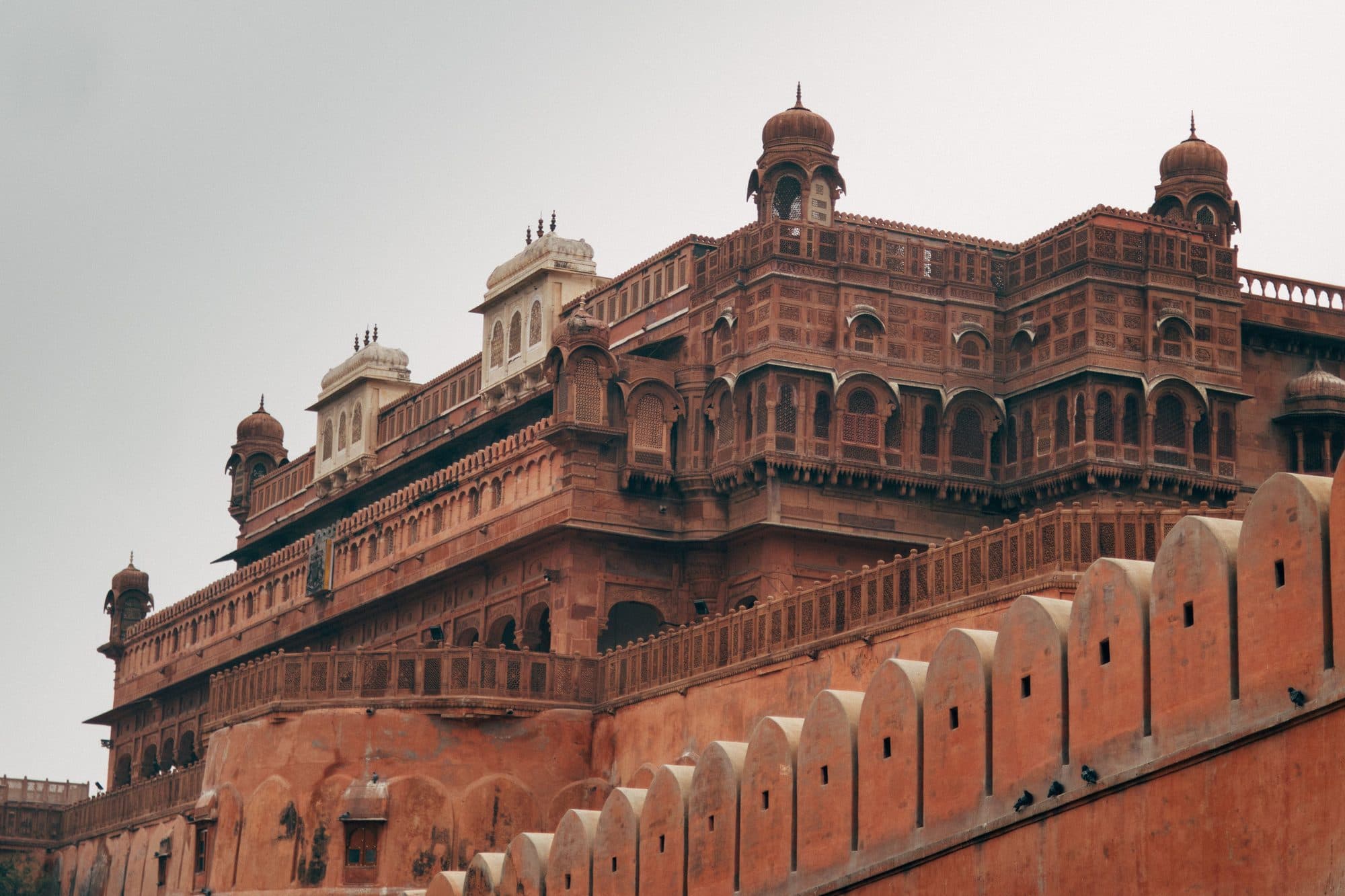
Rajasthan
Bikaner sees fewer visitors than Jaipur or Jodhpur, but Junagarh Fort holds some of the most richly decorated palace rooms in Rajasthan, painted, gilded and mirrored from floor to ceiling. The city is also known for camels, red-sandstone havelis and Bikaneri bhujia, a crisp, spiced snack sold across India.
Rao Bika, a son of Jodhpur's founder Rao Jodha, founded Bikaner in 1488 in the dry country to the north. The city grew on the caravan trade, and Maharaja Ganga Singh, who ruled from 1887 to 1943, modernised the state and built Lalgarh Palace.
Bikaner fits naturally into a desert circuit with Jaisalmer and Jodhpur. From Jaipur, the road runs through Shekhawati, a region of small towns such as Mandawa, Nawalgarh and Fatehpur whose merchant families covered their havelis in painted murals.
What to see
Built between 1589 and 1594 by Raja Rai Singh, a general in Akbar's army, Junagarh stands on flat ground rather than a hilltop. Inside are palace rooms decorated with gold leaf, mirror-work and painted clouds, and a museum of arms and royal objects.
Built in red sandstone in the early 20th century for Maharaja Ganga Singh and named after his father, Lalgarh mixes Rajput, Mughal and European styles. Part of it is now a hotel, and part houses a museum.
About 30 km south of Bikaner, this temple is home to thousands of rats, revered as the reborn kin of Karni Mata, a sage worshipped as a form of the goddess Durga. Spotting a white rat is considered lucky.
About 8 km from the city, this government research farm breeds and studies camels, with a small museum and camel-milk products to try. It is usually open only in the afternoons, so check days and hours.
In the old city, the Rampuria havelis are a group of red-sandstone mansions built for a merchant family, with carved façades best seen on a walk with a guide.
Things to do
Bikaner's bhujia, its rasgullas and other sweets are sold all over the old city. A walk through the bazaars below Junagarh is the easiest way to try them.
On the drive from Jaipur, stop in Mandawa or Nawalgarh to see havelis covered in murals of gods, legends, trains and motor cars. A night in a Shekhawati heritage hotel breaks the journey.
Usually held in January, the festival brings decorated camels, parades, folk music and dance. Dates are announced each year.
When to go
November to February is the best time, with sunny days and cold nights; the camel festival is usually in January. October and March are warm, and from April to September Bikaner is very hot.
Getting there
Local knowledge
Shoes come off at the gate and rats run freely across the floors, so wear socks you don't mind leaving behind and move slowly.
The camel research centre is usually open only in the afternoons and closed on some days, so plan it after Junagarh and check hours in advance.
Jaipur to Bikaner is a long day of about 330 km. A night in Mandawa or Nawalgarh turns it into two easy days, with the painted havelis in between.
Questions
Bikaner is worth visiting for travellers who enjoy forts, palaces and desert life. Junagarh Fort is known for its richly decorated palace rooms, and the city is quieter than Jaipur or Jodhpur.
The Karni Mata temple is at Deshnoke, about 30 km south of Bikaner, around 45 minutes by road.
Bikaner is about 330 km from Jaipur, around 5–6 hours by road through the Shekhawati region, and trains also run between the two cities.
Yes. Bikaner is about 330 km from Jaisalmer, a 5–6 hour drive, so a desert circuit often runs from Jaipur to Bikaner, Jaisalmer and Jodhpur.
The Bikaner Camel Festival is usually held in January, with decorated camels, parades, folk music and dance. Dates are announced each year by Rajasthan Tourism.
Combine it with
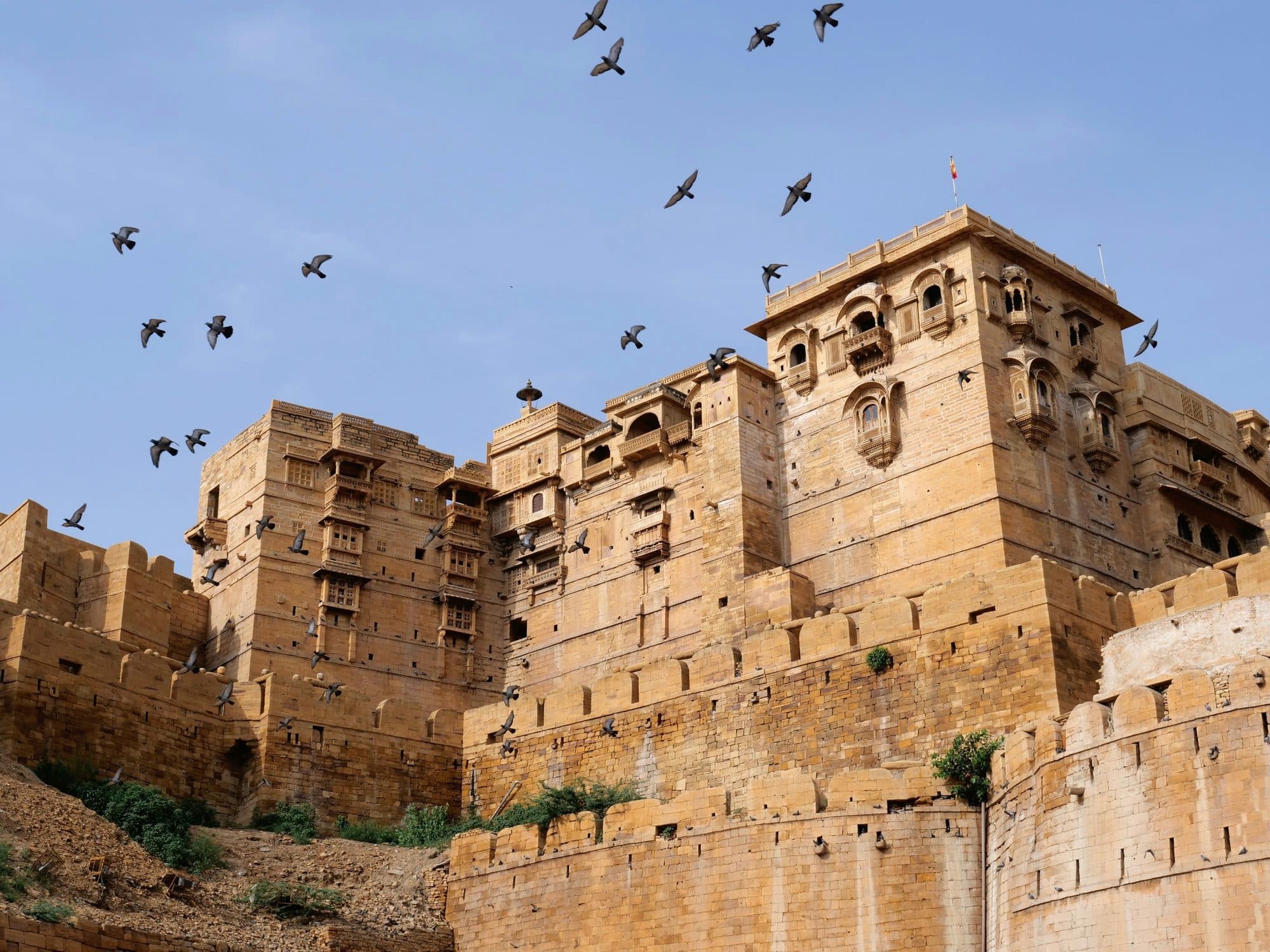
Rajasthan
The Golden City
A lived-in sandstone fort in the Thar Desert, carved merchant havelis and nights at a desert camp.
Best: Nov–Feb
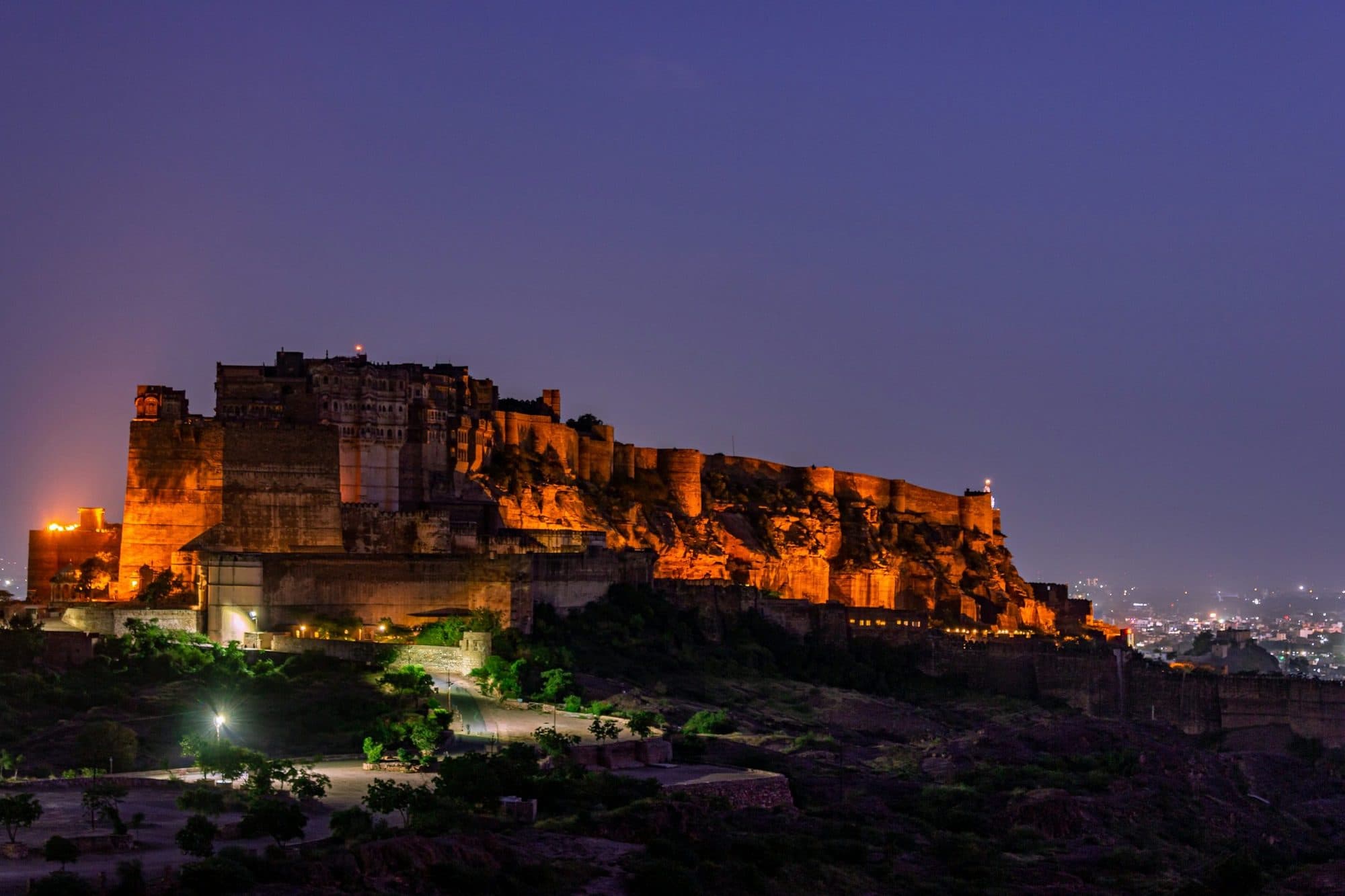
Rajasthan
The Blue City
Mehrangarh Fort above a blue-washed old city, and the gateway to Jaisalmer and the Thar Desert.
Best: Nov–Feb
Rajasthan
The Pink City
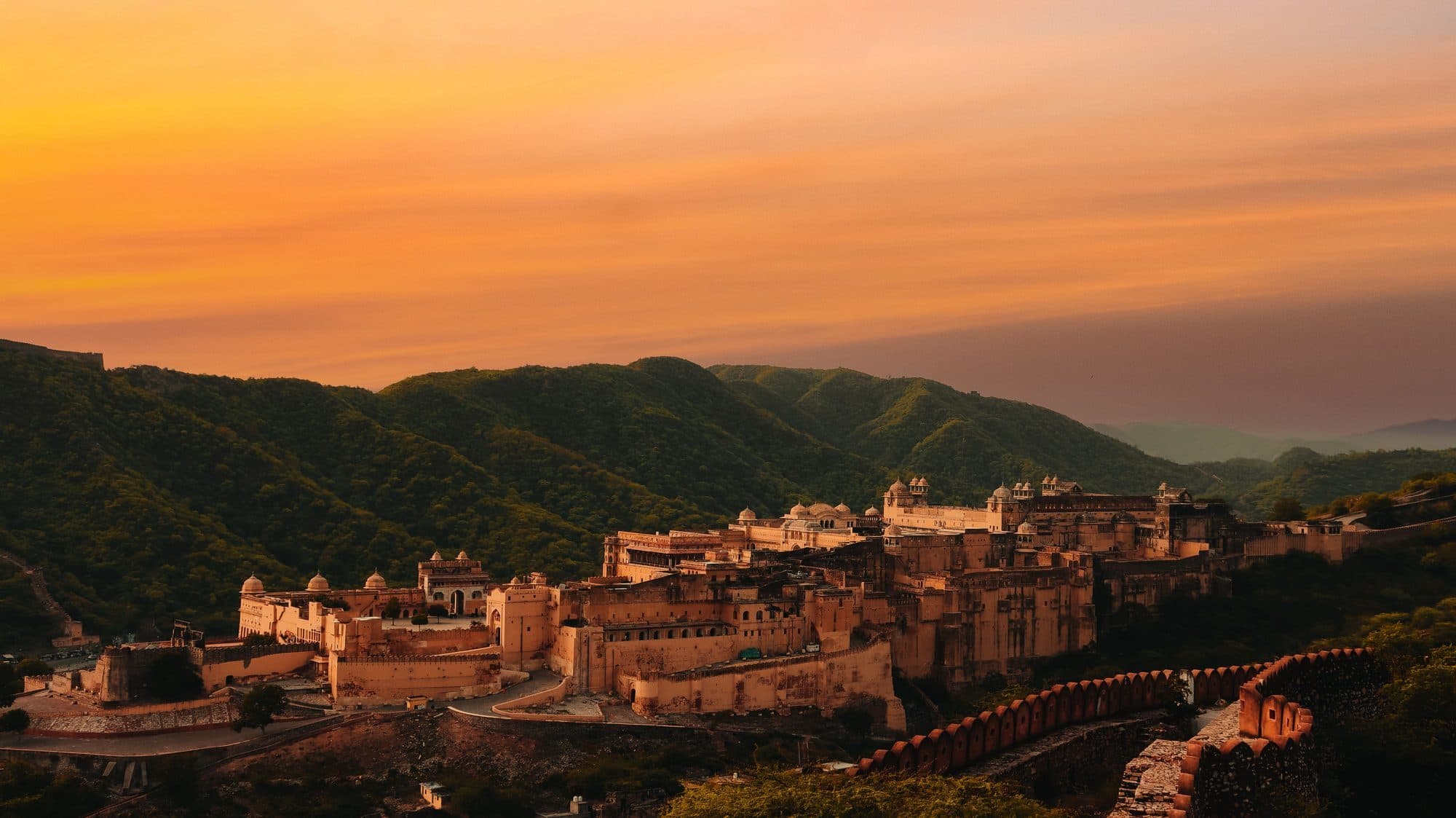
Rajasthan's capital, with Amer Fort, the walled Pink City, Jantar Mantar and bazaars full of textiles and gems.
Best: Nov–Feb
Share your dates, who's travelling and what you'd love to see. We'll reply with a day-by-day plan and an itemised quote — no obligation.