Pack for cold nights
Desert nights from December to February are cold, especially in a tent, even after a warm day. Bring a warm layer, a hat and socks.
Rajasthan · The Golden City
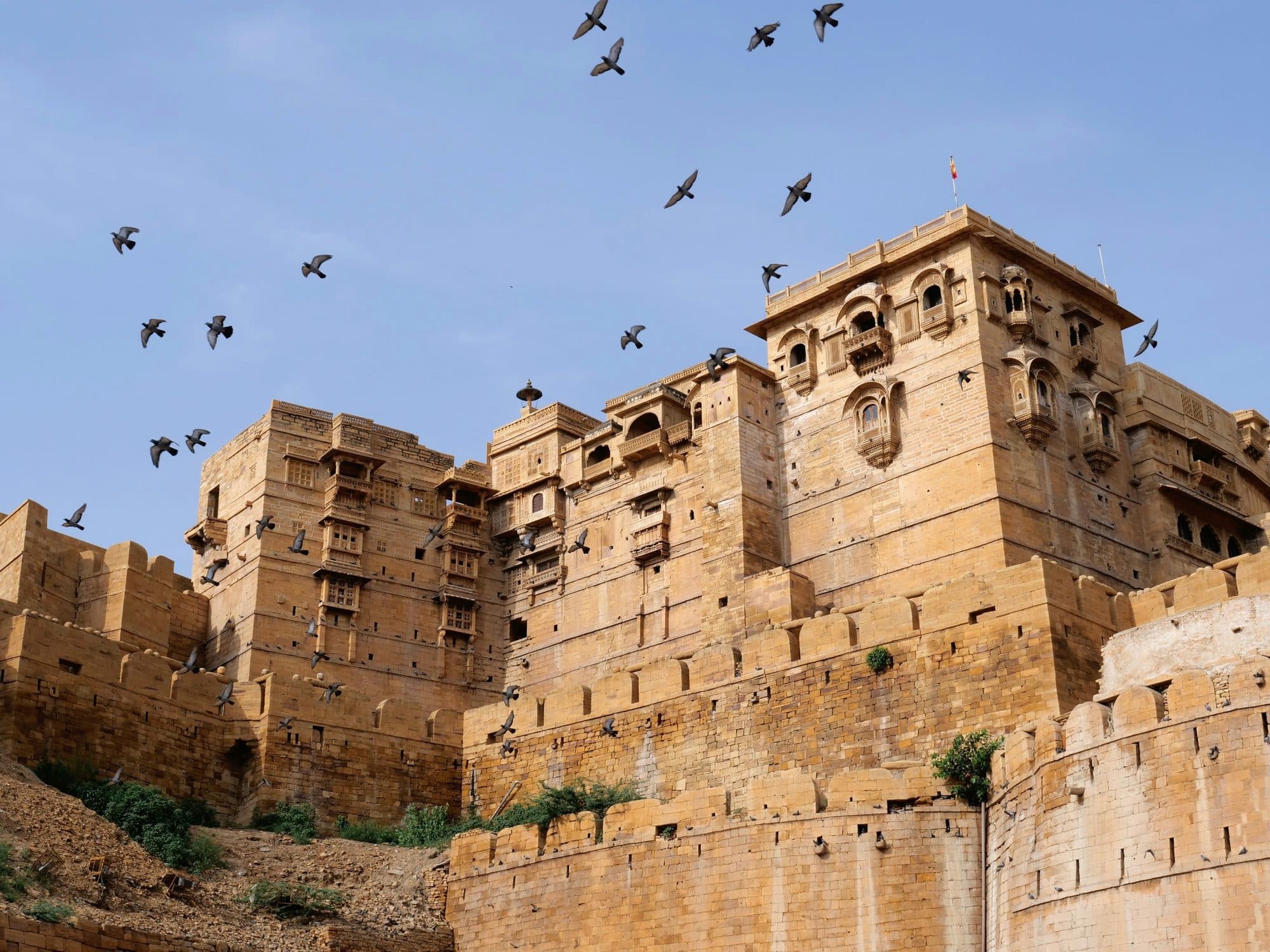
Jaisalmer's fort rises from the Thar Desert in yellow sandstone that turns gold in the late sun, and people still live inside its walls. Most trips pair a day in the fort and havelis with an evening on the dunes and a night at a desert camp.
Rawal Jaisal, a Bhati Rajput ruler, founded Jaisalmer in 1156 on Trikuta hill. Its merchants grew rich on the caravan trade across the desert and spent that wealth on havelis carved from the same golden stone as the fort.
Jaisalmer Fort is one of the UNESCO-listed Hill Forts of Rajasthan and one of the few forts in India still lived in, with a few thousand residents. Beyond the city lie the dunes of Sam and Khuri, the cenotaphs of Bada Bagh and the abandoned village of Kuldhara.
What to see
Inside the walls are the Maharawal's palace, now a museum, Jain temples carved between the 12th and 16th centuries, and lanes of homes and shops. Go in the morning, before the heat and the crowds.
A lane of five connected havelis built in the 19th century by a family of traders, with finely carved stone balconies and screens; parts of it are open as museums.
The old rainwater reservoir that once supplied the city, rebuilt in the 14th century and ringed with small temples, ghats and chhatris (domed pavilions). It is at its best around sunrise and sunset.
A short drive north of the city, Bada Bagh is a hillside of chhatris built as memorials to Jaisalmer's rulers, glowing in the late-afternoon light.
Sam, about 40 km west, has the best-known dunes and most of the desert camps, with camel and jeep rides at sunset. Khuri, about 45 km south-west, is smaller and usually quieter.
About 18 km from the city, this village of the Paliwal Brahmin community was abandoned in the early 19th century; stories differ on why. It is often combined with an evening at the dunes.
Things to do
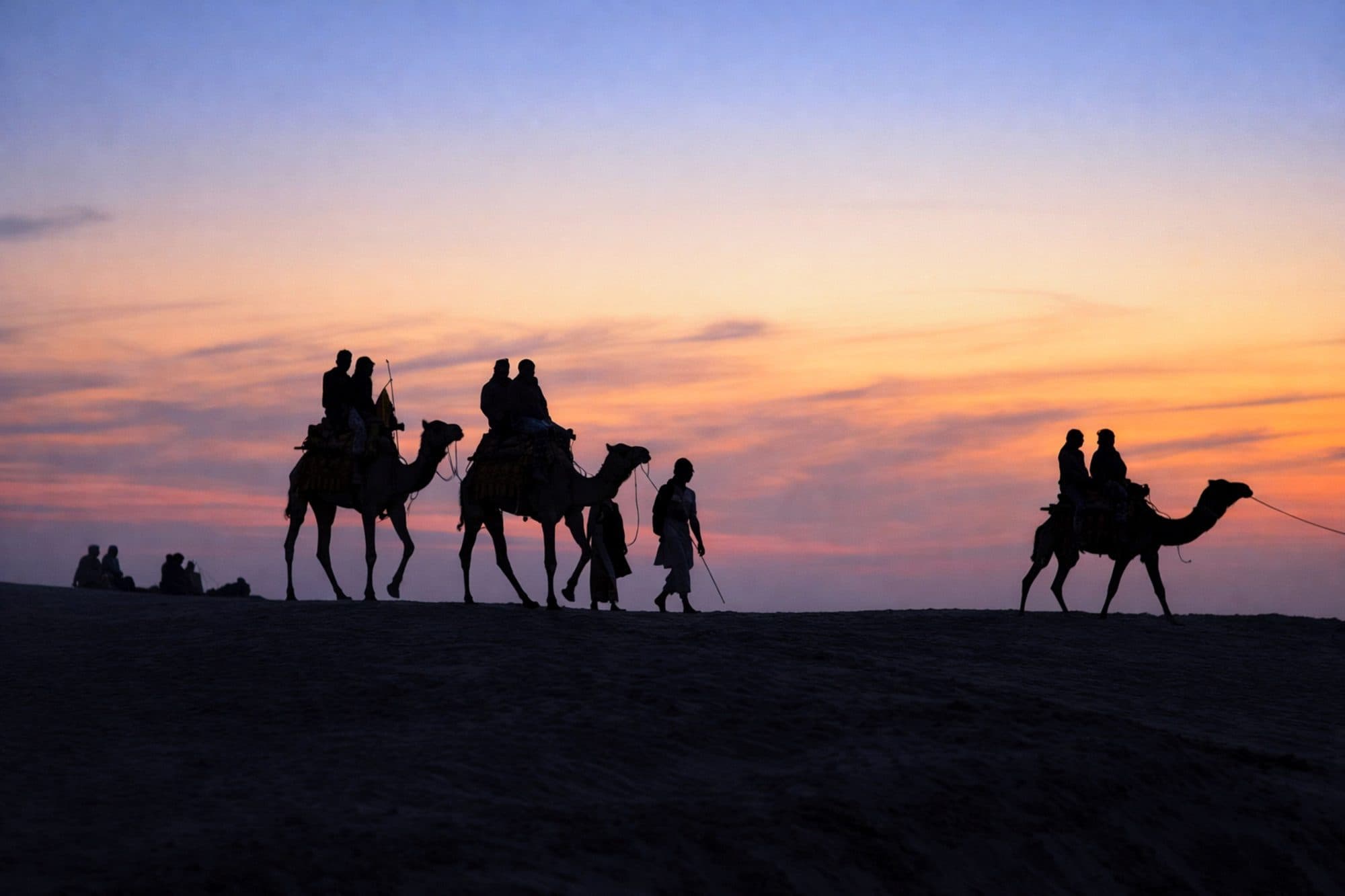
Camps near Sam and Khuri range from simple tents to Swiss tents (large tents with attached bathrooms), usually with dinner by a fire and folk music from the Manganiyar or Langa communities, hereditary musicians of western Rajasthan. Standards vary widely, so choose with care.
Ride out by camel or jeep to watch the sun go down over the sand. Sam's main dunes get crowded at sunset in season; Khuri is calmer.
The Jaisalmer Desert Festival is usually held in late January or February, around the full moon of the Hindu month of Magh, with camel races, folk music and turban-tying contests. Dates are announced each year.
When to go
November to February is the best time, with sunny days and cold nights that can drop into single digits Celsius. October and March are warm; from April to September the desert is very hot, and many camps close.
Getting there
Local knowledge
Desert nights from December to February are cold, especially in a tent, even after a warm day. Bring a warm layer, a hat and socks.
People live inside the fort, so dress modestly and ask before photographing anyone. Its Jain temples ask you to remove shoes and leave leather items outside, and tourist hours are limited, so check timings.
Jaisalmer is far from Rajasthan's other cities and flights are seasonal, so many trips come by road from Jodhpur or by overnight train from Jaipur or Delhi. Allow a full day each way.
Tours
 12 days / 11 nights
Jaipur → Bikaner → Jaisalmer → Jodhpur → Udaipur
Twelve days by private car from Jaipur through Shekhawati, Bikaner, Jaisalmer and Jodhpur to Udaipur, with an optional night at a desert camp.
3 days / 2 nightsJaisalmer
Three days in Jaisalmer: the lived-in fort, carved havelis and Gadisar Lake, then a night at a desert camp with a sunset camel ride and folk music.
Questions
Two nights in Jaisalmer work well: a day for the fort, Patwon ki Haveli and Gadisar Lake, then an afternoon drive to the dunes for sunset and a night at a desert camp.
Sam, about 40 km west of Jaisalmer, has the best-known dunes and the most desert camps, and it gets busy at sunset in season. Khuri, about 45 km south-west, is smaller and usually quieter.
The best time to visit Jaisalmer is November to February, when days are sunny and nights cold. From April to September the desert is very hot and many camps close.
Jaisalmer Airport usually has flights only in winter, so many travellers drive from Jodhpur, about 285 km or five hours away, or take an overnight train from Jaipur or Delhi.
Yes. Jaisalmer Fort is one of the few forts in India still lived in: a few thousand people have homes, shops, temples and guesthouses inside its walls.
Combine it with
Share your dates, who's travelling and what you'd love to see. We'll reply with a day-by-day plan and an itemised quote — no obligation.