
See the City Palace early
The palace museum fills with groups by late morning. Arrive around opening time and save the boat for the late afternoon.
Rajasthan · The City of Lakes
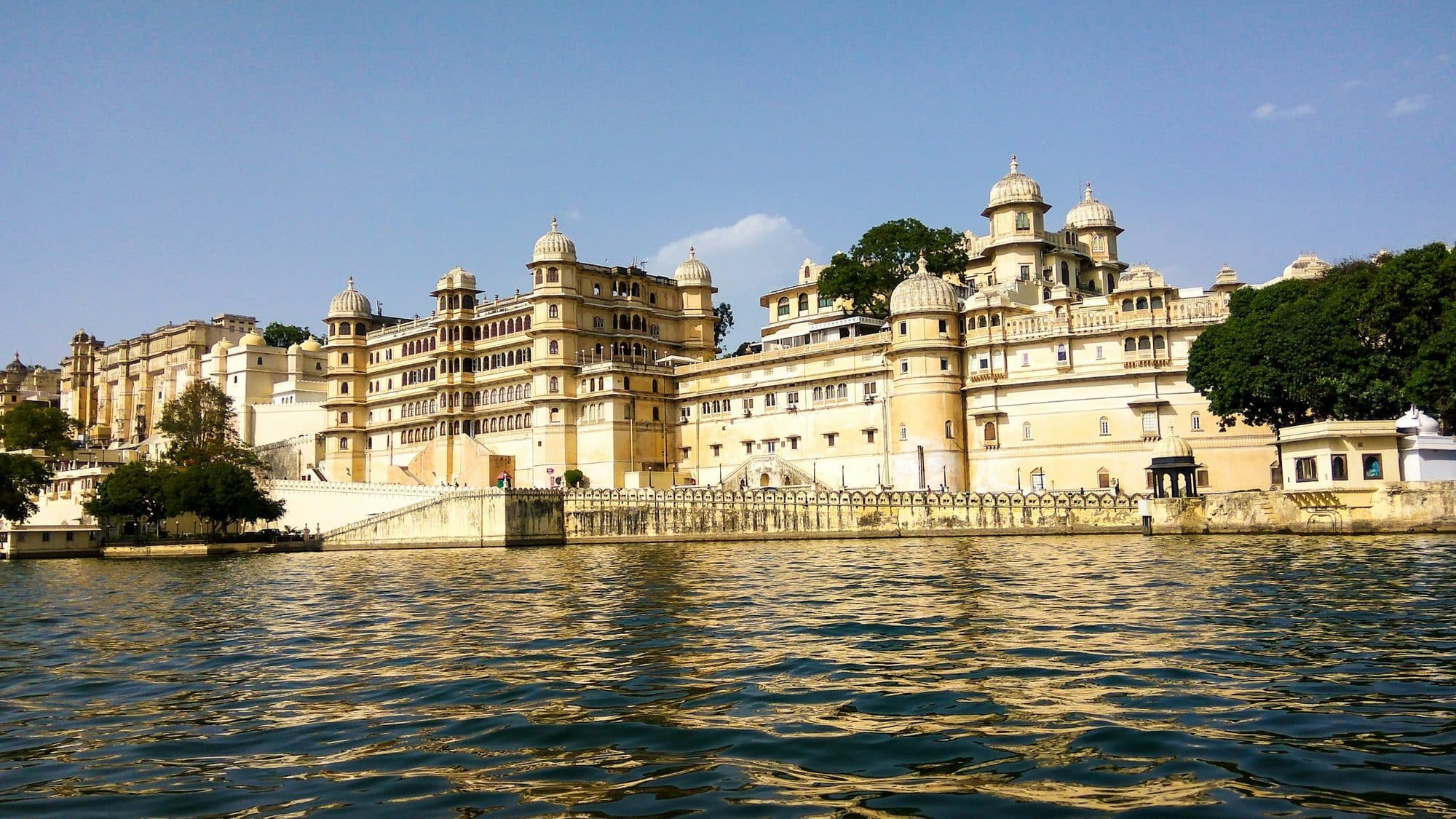
Udaipur is Rajasthan at its gentlest: palaces along Lake Pichola, the Aravalli hills all around, and evenings on rooftops watching the light change on the water.
Maharana Udai Singh II founded Udaipur in the 16th century, and it became the capital of Mewar after Chittorgarh fell to the Mughal emperor Akbar in 1568. Later Maharanas added palaces, lakes, gardens and island pavilions, so much of the city faces the water.
The old city around the City Palace is a maze of lanes, havelis, ghats (steps leading down to the water) and rooftop cafés. Udaipur is also the natural link to Gujarat: Ahmedabad is about 260 km away, and Mount Abu, near the border, about 165 km.
What to see
Built by successive Maharanas over several centuries, the City Palace rises above the eastern shore of Lake Pichola, and its courtyards and balconies look out across the water. Part of it is still used by the former royal family.
Boats on Lake Pichola pass the Lake Palace, now a hotel, and usually stop at Jag Mandir, the island palace where Prince Khurram, the future emperor Shah Jahan, sheltered in the 1620s. Sunset sailings are the most popular.
The name means garden of the maidens: it was laid out in the early 18th century by Maharana Sangram Singh II for the women of the court, with fountains, lotus pools and marble elephants.
An 18th-century haveli (a mansion built around courtyards) on Gangaur Ghat, now a museum of restored rooms, costumes, turbans and puppets.
North of Pichola, Fateh Sagar has a long promenade, an island garden reached by boat, and Moti Magri hill with its memorial to Maharana Pratap. Local families come here for an evening walk.
Begun for Maharana Sajjan Singh in the 1880s, this hilltop palace in a wildlife sanctuary west of the city looks over the lakes and the Aravalli ranges, and is best at sunset.
Things to do
Make it a full-day loop or a stop on the drive to Jodhpur. Kumbhalgarh, about 85 km away, is a UNESCO-listed hill fort whose walls run for kilometres over the hills; Ranakpur's 15th-century Jain temple, about 90 km away, is known for its forest of carved marble pillars, and tourists are usually admitted from around midday.
About 115 km north-east (2–2.5 hours by road), Chittorgarh is one of India's largest forts and a UNESCO-listed hill fort, with the 15th-century Vijay Stambh (victory tower) and the palace associated with Rani Padmini. It also makes a stop on the drive to Jaipur.
Watch the City Palace catch the last light from Ambrai Ghat, take a sunset boat or eat on a rooftop above the water. The Dharohar folk dance show is usually held each evening near Gangaur Ghat; check the current venue and time.
When to go
October to March is the main season, and November to February the most comfortable. The monsoon (July to September) turns the hills green and, after good rains, fills the lakes; April to June is hot.
Getting there
Local knowledge
The palace museum fills with groups by late morning. Arrive around opening time and save the boat for the late afternoon.
Some old-city hotels and ghats sit on lanes too narrow for cars, so expect to walk the last stretch or take an auto-rickshaw (a three-wheeled taxi).
The lakes are fed by the monsoon, so water levels change from year to year; they are usually fullest from September through the winter.
Tours
 8 days / 7 nights
Delhi → Agra → Jaipur → Udaipur
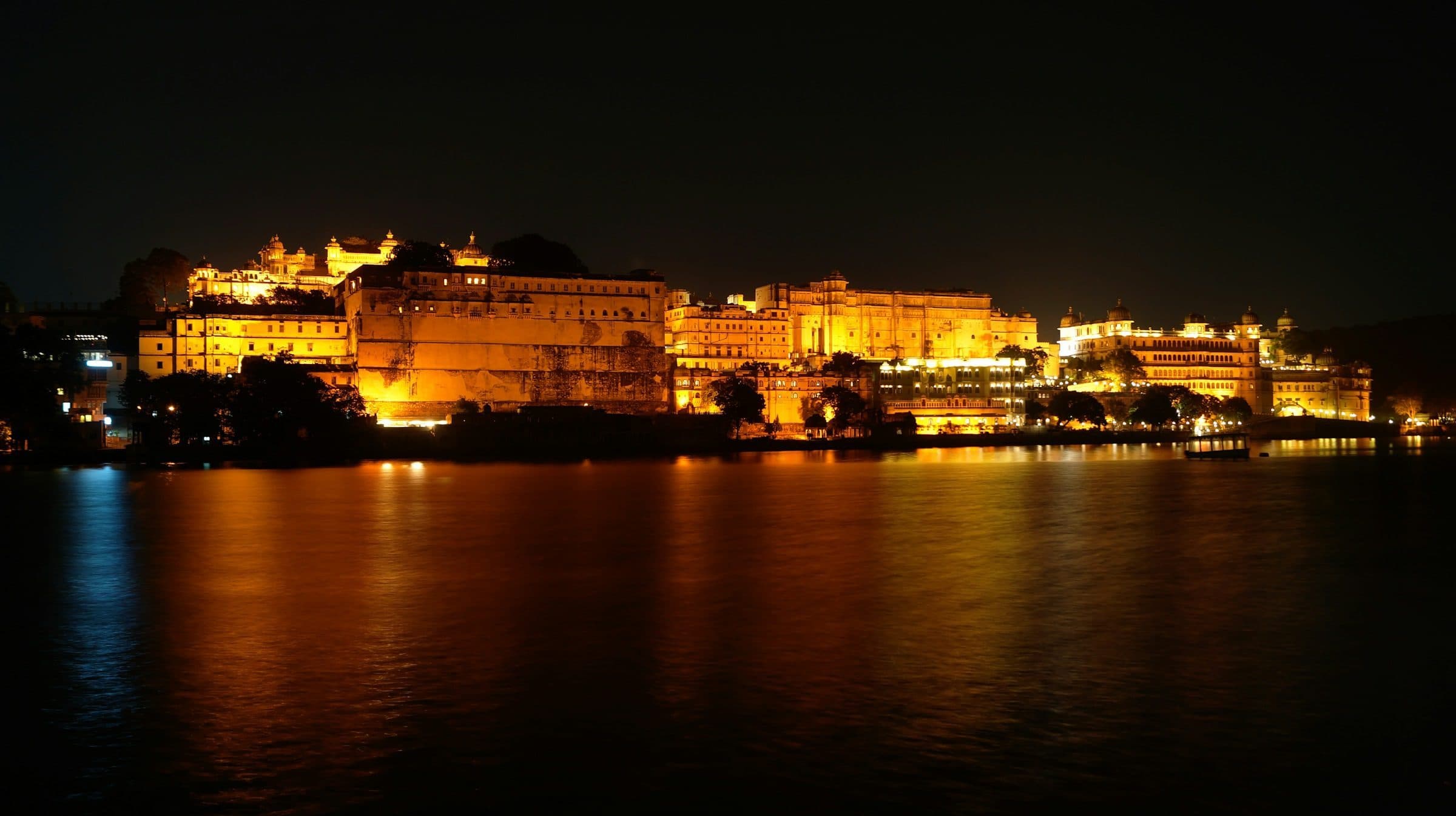
Delhi, Agra and Jaipur, then south via Chittorgarh to Udaipur for three nights by the lakes, in eight days.
 8 days / 7 nights
Jaipur → Pushkar → Jodhpur → Udaipur
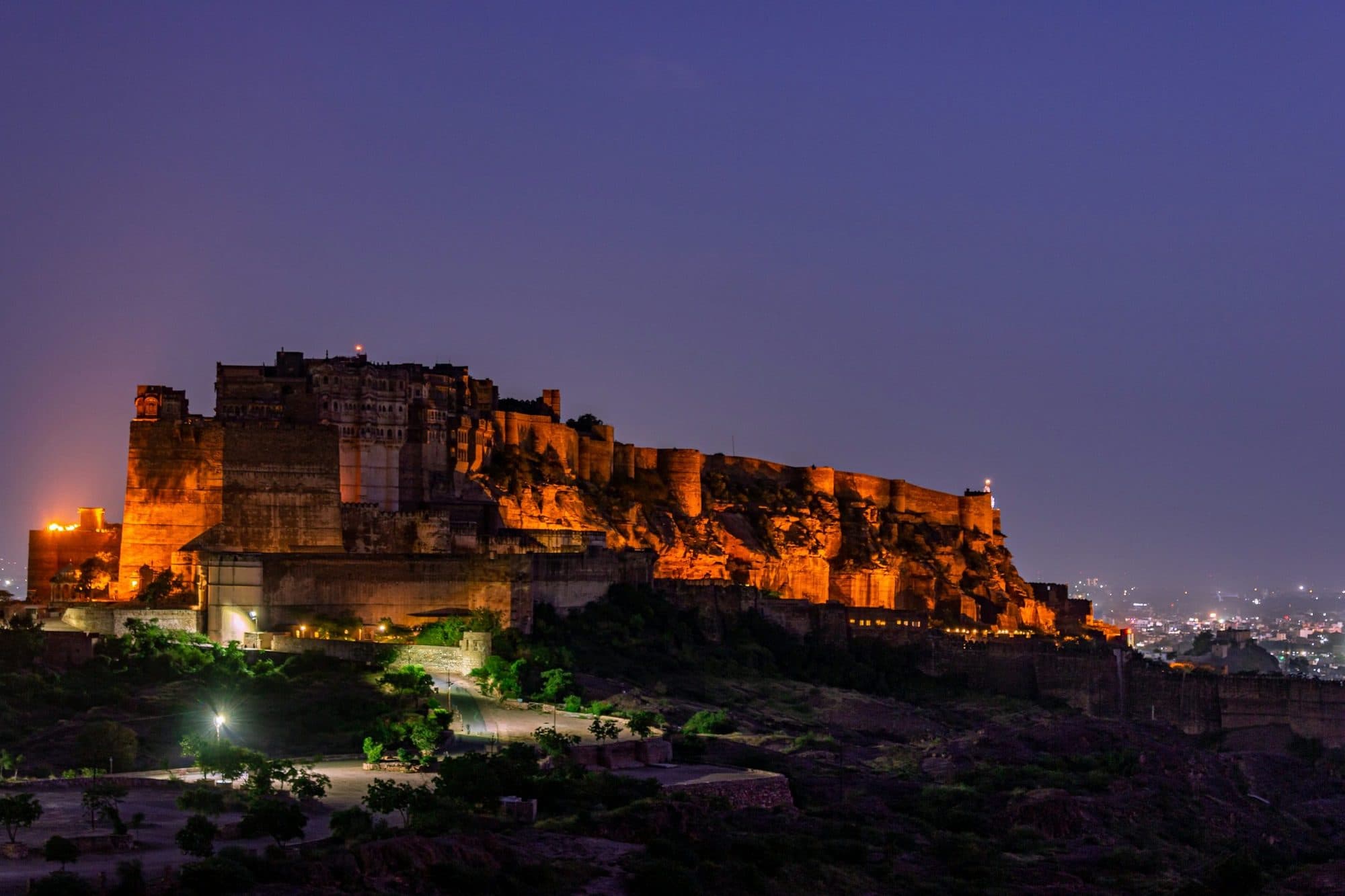
Eight days by private car through Jaipur, Pushkar, Jodhpur and Udaipur, with a stop at the Jain temple at Ranakpur on the way.
 12 days / 11 nights
Jaipur → Bikaner → Jaisalmer → Jodhpur → Udaipur
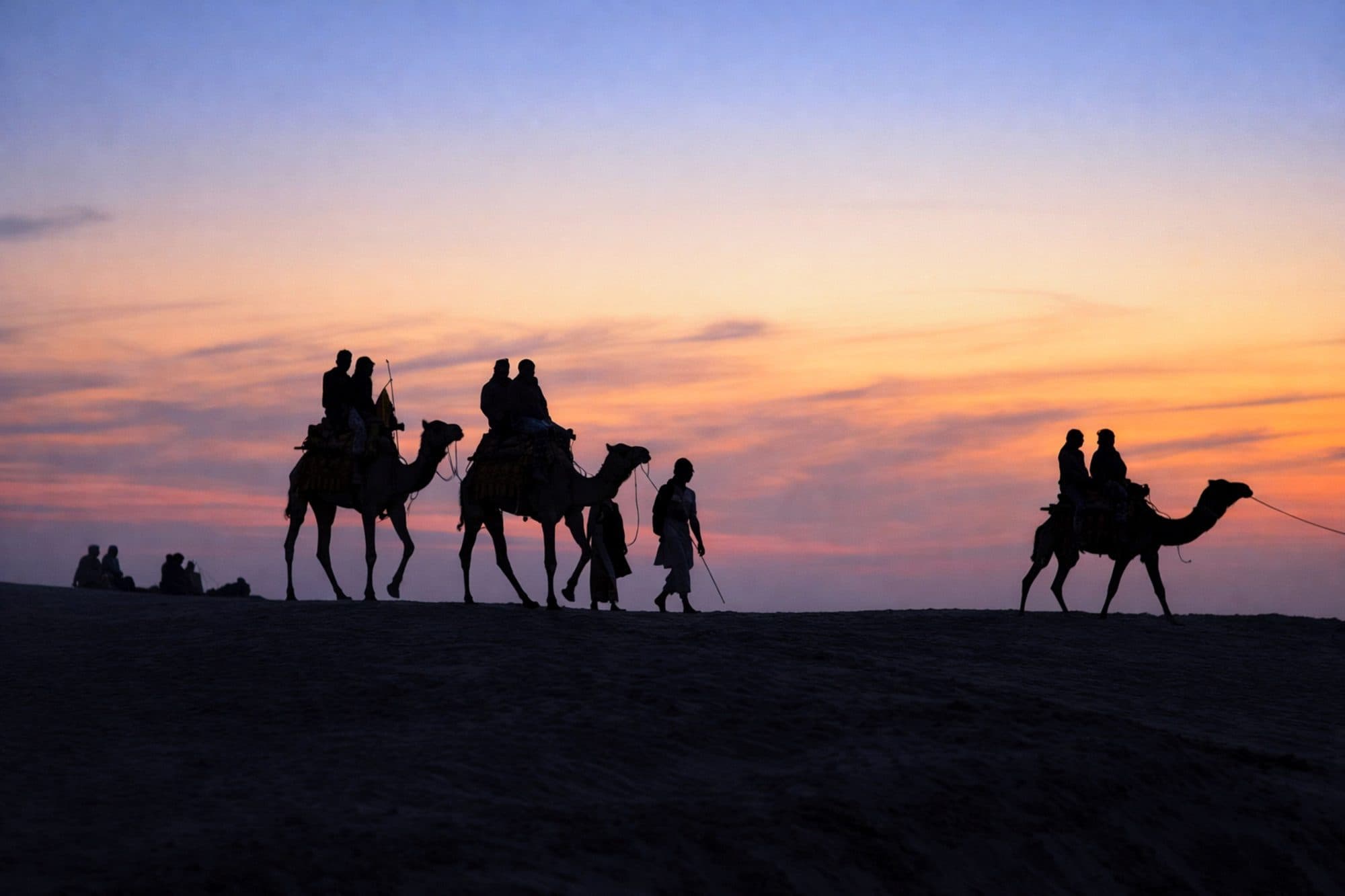
Twelve days by private car from Jaipur through Shekhawati, Bikaner, Jaisalmer and Jodhpur to Udaipur, with an optional night at a desert camp.
5 days / 4 nightsUdaipur → Mount Abu
Five days by private car: three nights in Udaipur with a day out to Kumbhalgarh and Ranakpur, then a night in Mount Abu, Rajasthan's only hill station.
Questions
Two nights in Udaipur cover the City Palace, a Lake Pichola boat ride, Saheliyon ki Bari and Sajjangarh at sunset. A third night adds a day trip to Kumbhalgarh and Ranakpur or to Chittorgarh.
Udaipur is one of the best places in Rajasthan for a monsoon trip: from July to September the hills turn green and, after good rains, the lakes fill. Expect humid days and showers.
Udaipur is about 400 km from Jaipur, around 6–7 hours by road; you can break the drive at Chittorgarh or Pushkar, or take the train.
Yes. Kumbhalgarh (about 85 km from Udaipur) and Ranakpur (about 90 km) make a full-day loop or a stop on the drive to Jodhpur. Tourists are usually admitted to the Ranakpur temple from around midday, so see Kumbhalgarh first.
Udaipur's airport is Maharana Pratap Airport (UDR) at Dabok, about 22 km from the city, with direct flights from Delhi, Mumbai and other Indian cities.
Combine it with
Rajasthan
The Blue City
Mehrangarh Fort above a blue-washed old city, and the gateway to Jaisalmer and the Thar Desert.
Best: Nov–Feb
Rajasthan
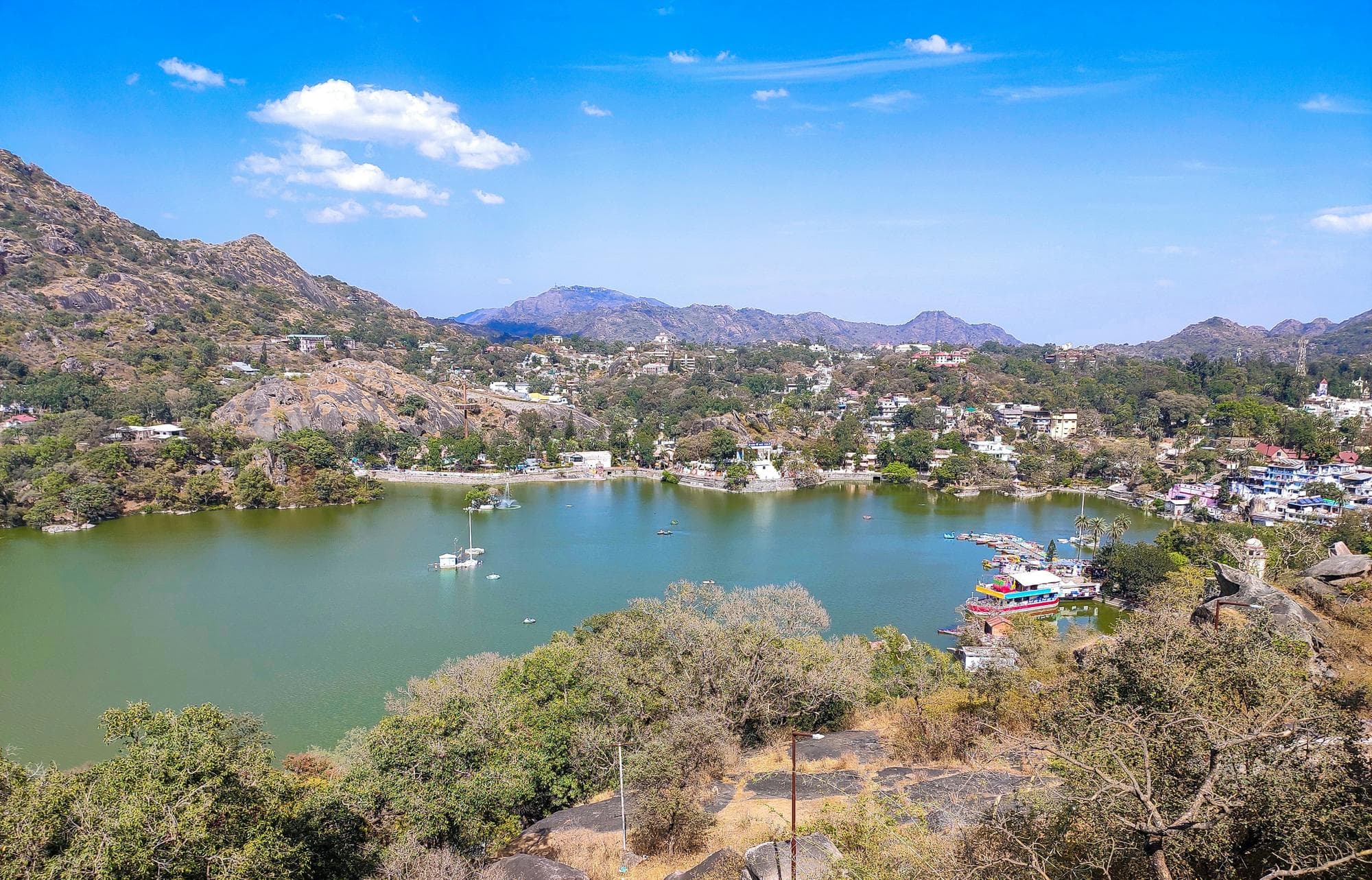
Rajasthan's only hill station, with the marble Dilwara temples, Nakki Lake and cooler air, close to Udaipur and the Gujarat border.
Best: Feb–Mar, Oct–Nov
Rajasthan
The Pink City
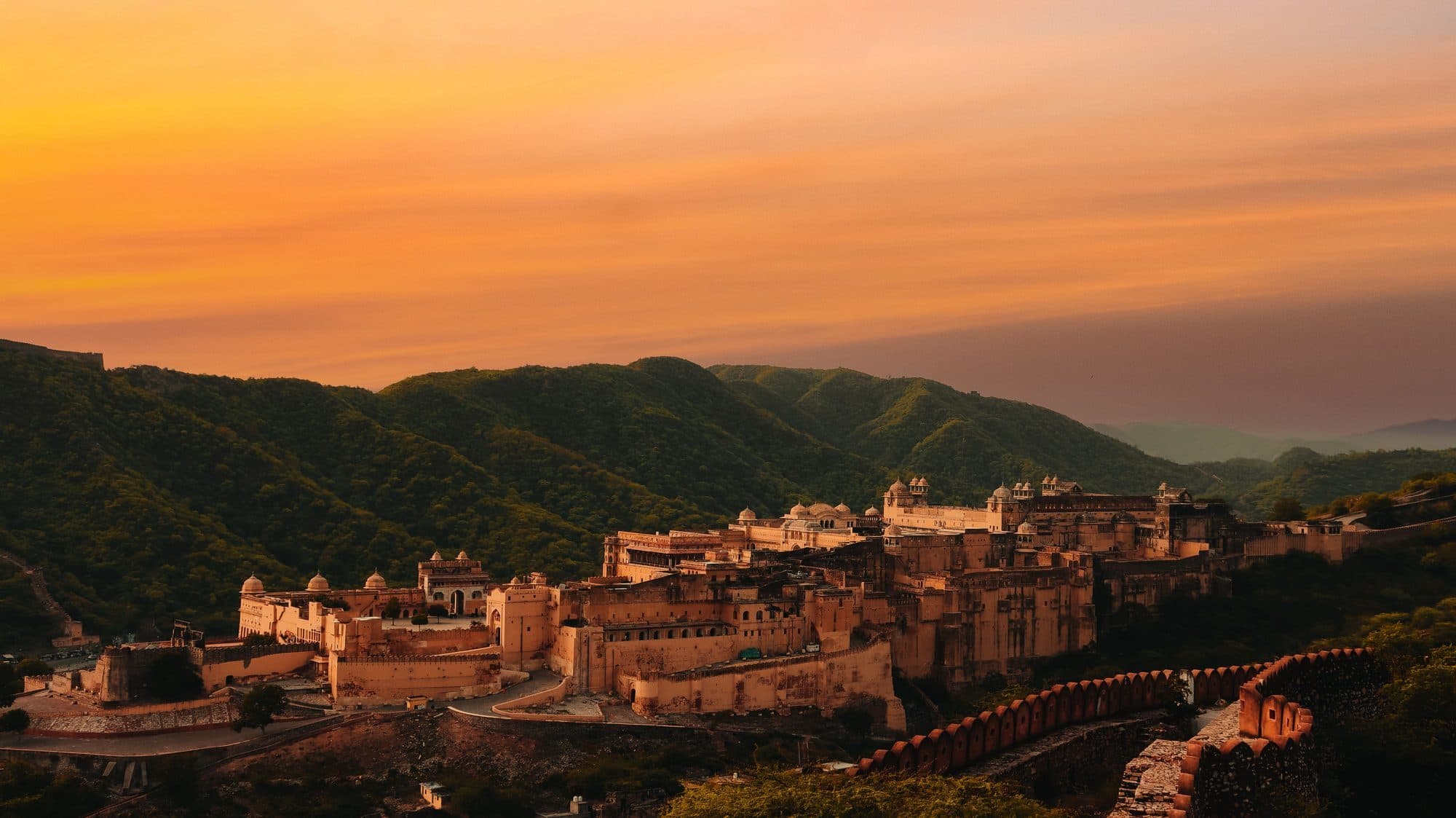
Rajasthan's capital, with Amer Fort, the walled Pink City, Jantar Mantar and bazaars full of textiles and gems.
Best: Nov–Feb
Gujarat
India's first World Heritage City
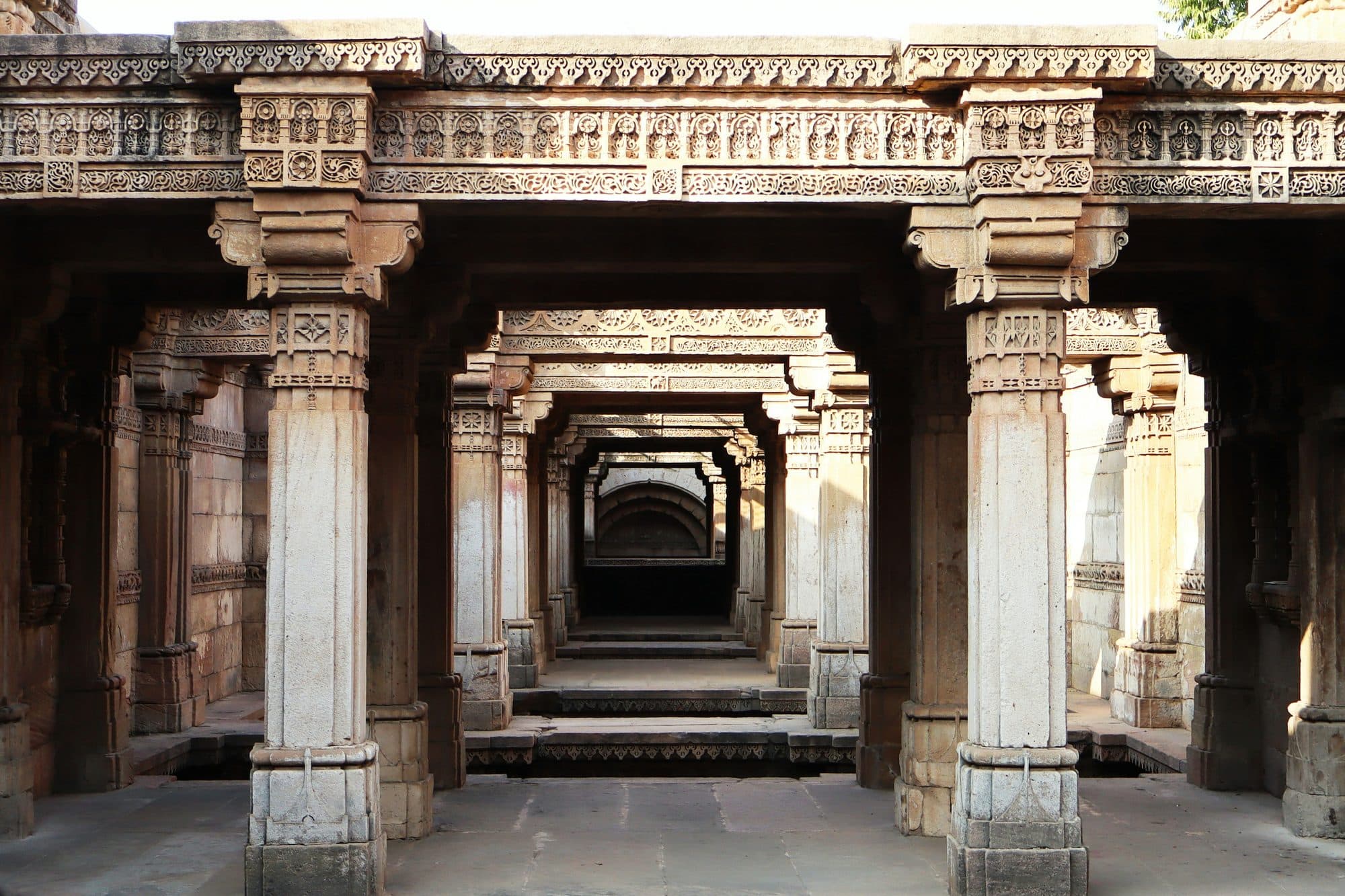
Gujarat's largest city: a walled old town of pols, mosques and temples, Gandhi's Sabarmati Ashram, and stepwells within a day's drive.
Best: Nov–Feb
Share your dates, who's travelling and what you'd love to see. We'll reply with a day-by-day plan and an itemised quote — no obligation.