
Leave phones at the hotel
Phones, cameras and bags are not allowed inside the temple. There are lockers near the entrance, but queues build at aarti times.
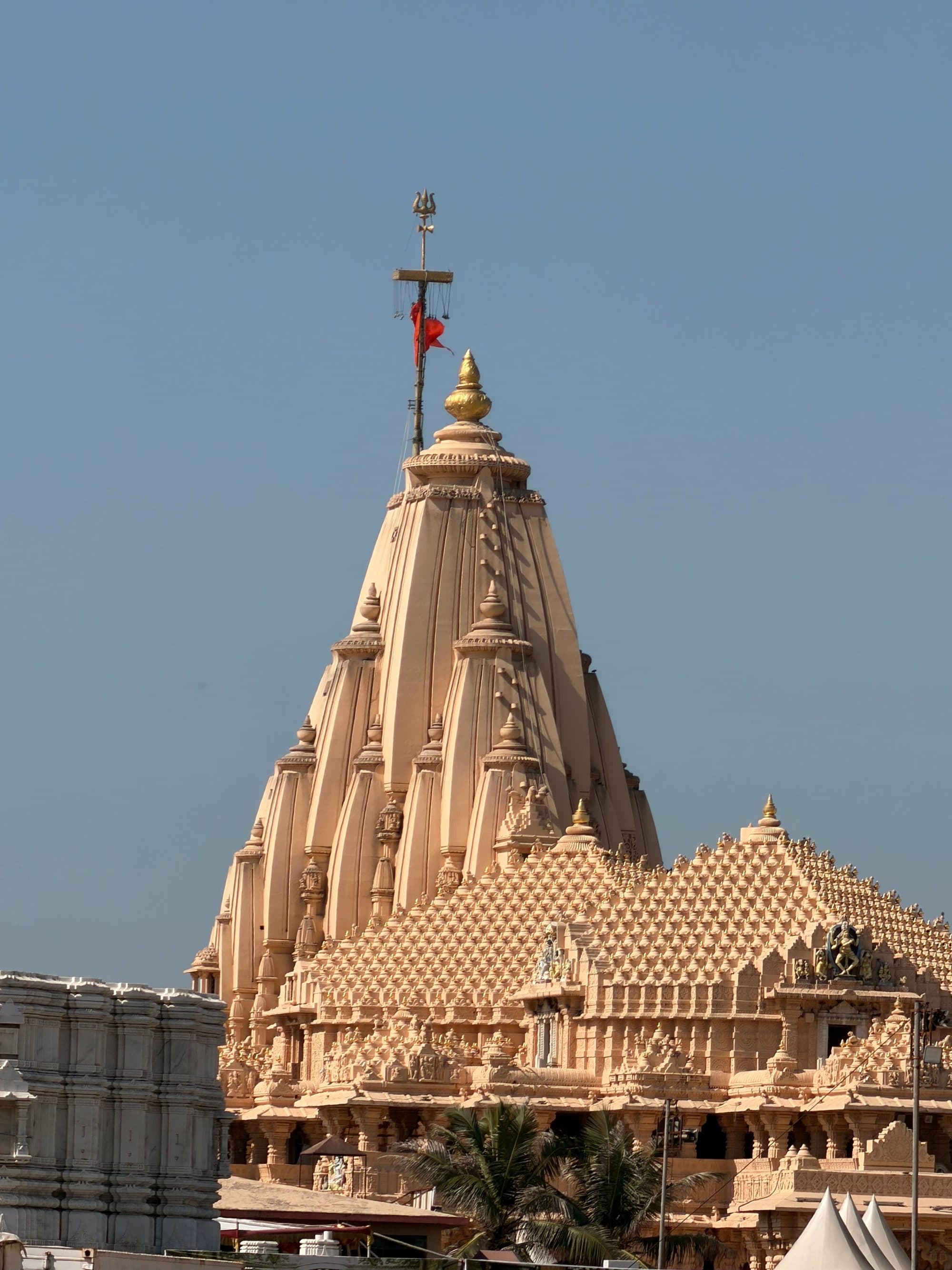
Gujarat · The first of the twelve Jyotirlingas
Somnath temple stands on the Arabian Sea at Prabhas Patan, near Veraval, and is revered as the first of the twelve Jyotirlingas of Shiva. One night covers the evening aarti, the light and sound show and the sites linked to Krishna's last days.
A Jyotirlinga is a shrine where Shiva is worshipped as a column of light, and Somnath heads the traditional list of twelve. The temple was attacked and rebuilt many times; after Independence, Sardar Vallabhbhai Patel led its rebuilding, and the present temple was completed in 1951.
Prabhas Patan is also linked with the end of Krishna's life: Bhalka Tirth is where he is believed to have been struck by a hunter's arrow, and Dehotsarg, by the Triveni Sangam, where he left the world. Gir is about an hour away, and Dwarka a day's drive up the coast.
What to see
The temple's tall shikhara (spire) rises above the sea wall. Beside it, the Baan Stambh (arrow pillar) carries an inscription saying there is no land in a straight line from here to the South Pole. A seafront promenade, opened in 2021, runs alongside, though the sea is too rough for swimming.
Where the Hiran, Kapila and Saraswati rivers meet before reaching the sea, with ghats (steps to the water) where pilgrims bathe.
A temple on the Veraval road at the spot where Krishna is believed to have been struck in the foot by the arrow of a hunter named Jara.
Dehotsarg, near the Sangam, is where Krishna is believed to have left his body. Its Gita Mandir has the eighteen chapters of the Bhagavad Gita carved on marble pillars.
A temple built by Ahilyabai Holkar, queen of Indore, in the 1780s, when the main temple lay in ruins. Its precinct was rebuilt in 2021.
Things to do
Aarti (a prayer ritual with lamps) is usually held at 7 am, 12 noon and 7 pm. A light and sound show on the temple's history follows the evening aarti, usually around 7:45–8 pm, weather permitting.
Shravan (usually July to August) and Maha Shivratri (February or March) bring the year's biggest crowds, when darshan (seeing the deity) can take hours.
Diu, a former Portuguese territory about 90 km east, has a 16th-century sea fort, old churches and quieter beaches.
When to go
October to March is the most comfortable time, with mild days by the sea. Shravan and Maha Shivratri bring the biggest crowds, and the monsoon months are humid, with a rough sea.
Getting there
Local knowledge
Phones, cameras and bags are not allowed inside the temple. There are lockers near the entrance, but queues build at aarti times.
Wear clothes that cover shoulders and knees and expect a security check; shoes are left at counters outside.
Food around the temple is vegetarian; Veraval, next door, is a fishing port with more choice.
Questions
Somnath is revered as the first of the twelve Jyotirlingas, the shrines where Shiva is worshipped as a column of light, because it heads the traditional list of the twelve. The present temple at Prabhas Patan was completed in 1951.
Aarti at Somnath temple is usually held at 7 am, 12 noon and 7 pm, and the light and sound show follows the evening aarti. Timings can change on festival days, so check at the temple.
No. Mobile phones, cameras and bags are not allowed inside Somnath temple, and lockers are available near the entrance.
Somnath is about 45 km from Sasan Gir, about an hour by road, and about 235 km from Dwarka along the coast via Porbandar, 5–6 hours. Many itineraries combine all three.
Combine it with
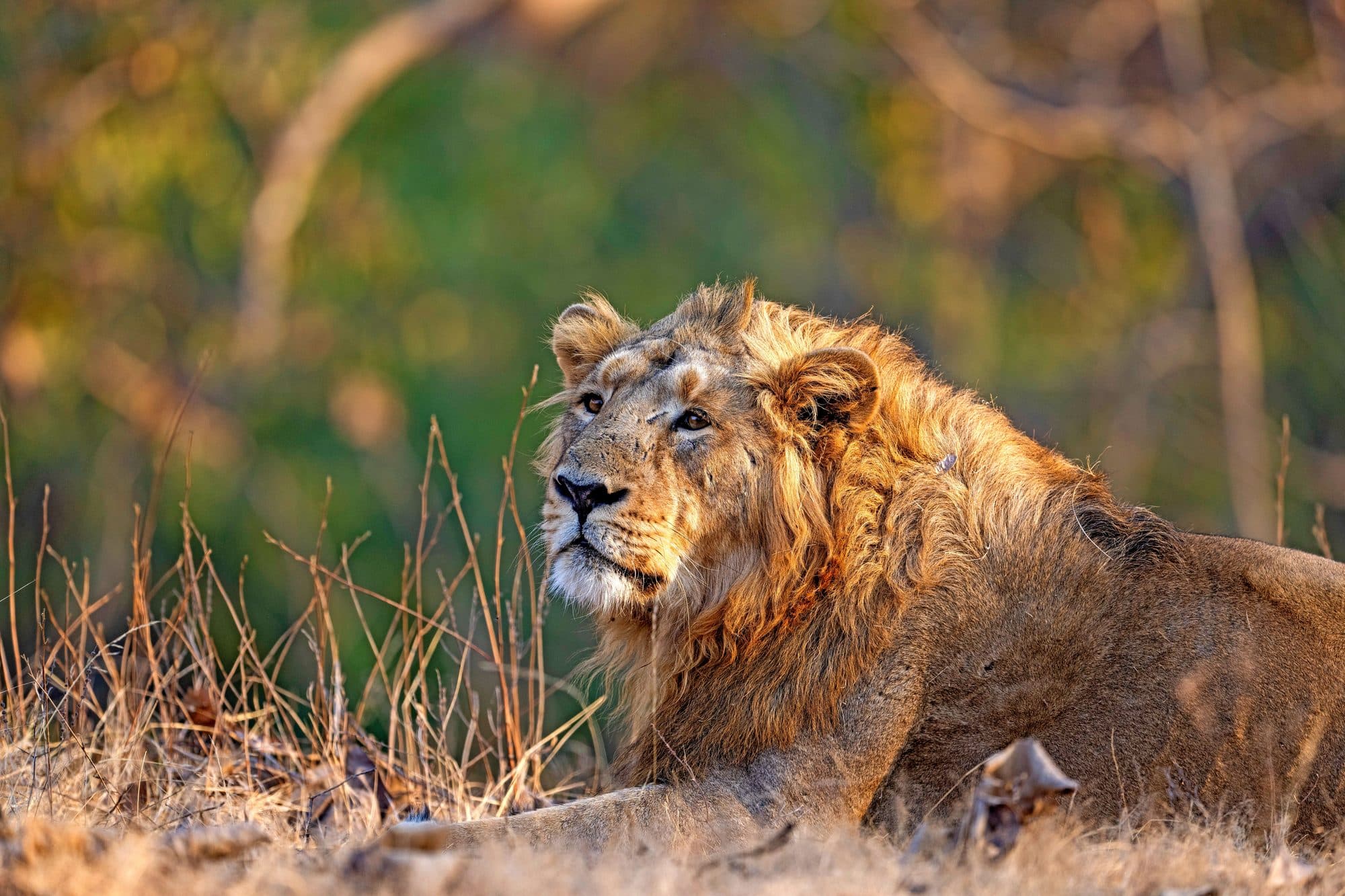
Gujarat
Home of the Asiatic lion
The only place where Asiatic lions live in the wild, with jeep safaris from Sasan Gir between mid-October and mid-June.
Best: Nov–Mar
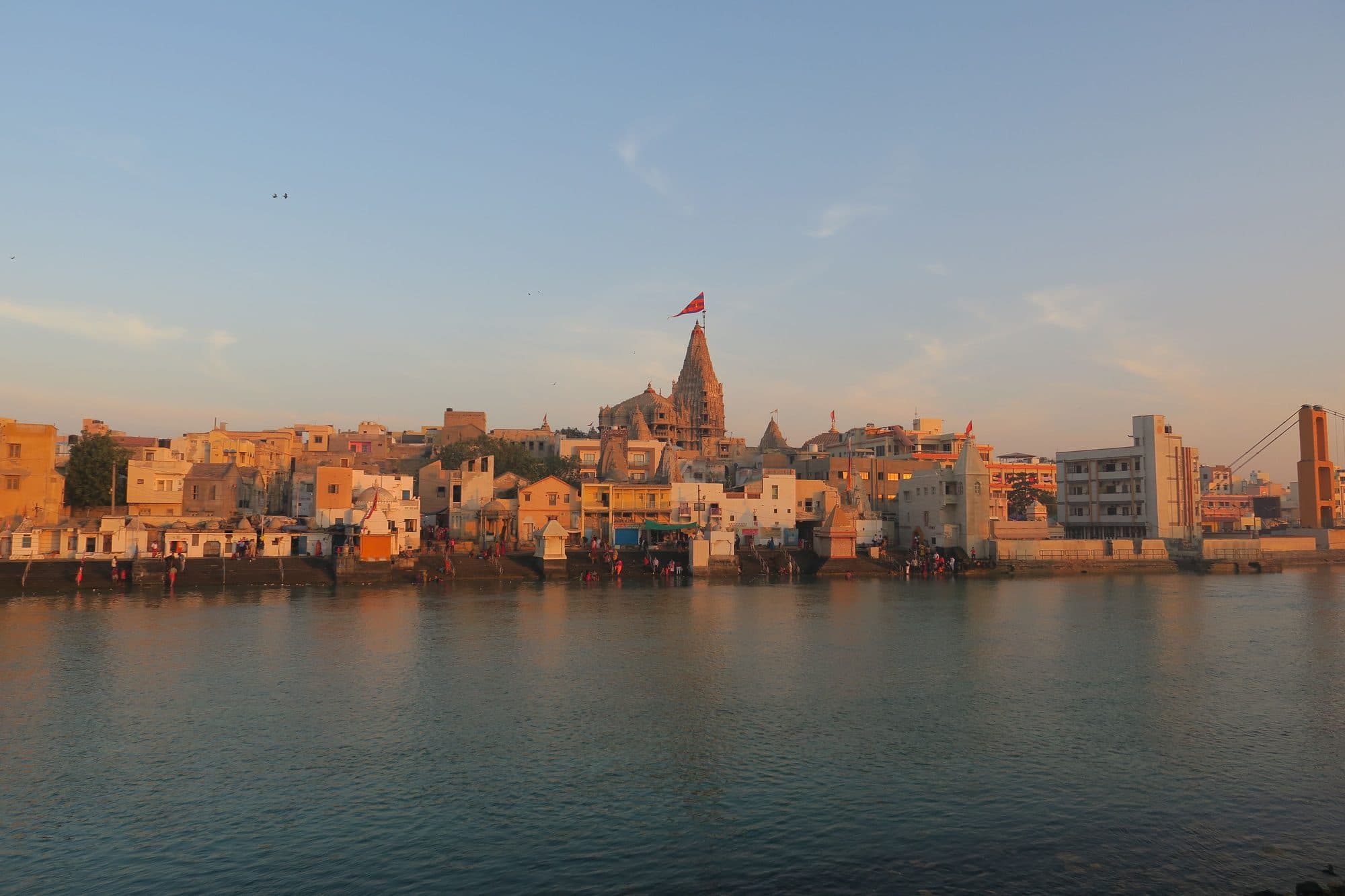
Gujarat
One of the Char Dham
Krishna's city on the Arabian Sea and one of the Char Dham, with the Dwarkadhish temple, Gomti Ghat, Bet Dwarka and Nageshwar.
Best: Nov–Feb
Share your dates, who's travelling and what you'd love to see. We'll reply with a day-by-day plan and an itemised quote — no obligation.