
Carry ID for the permit
Indian travellers need photo ID for the White Rann permit; foreign nationals should carry their passport and a copy of it.
Gujarat · The White Desert
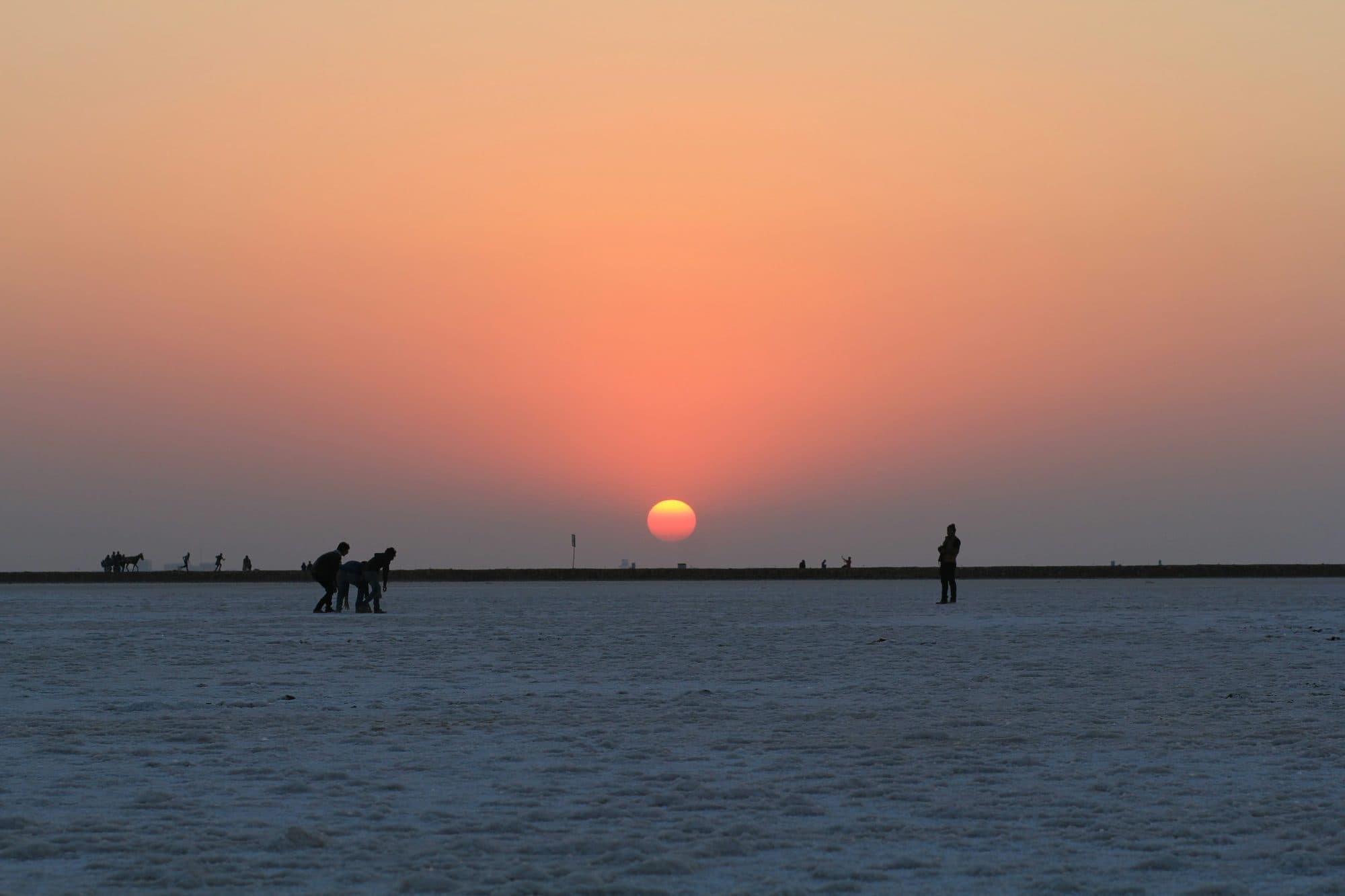
Each winter the Great Rann of Kutch dries into a crust of white salt that runs flat to the horizon. Stay at Dhordo on its edge for sunset and moonlight on the salt, and give a day to Bhuj and the craft villages.
The Great Rann is a seasonal salt marsh in the far north-west of Gujarat, near the border with Pakistan. It floods in the monsoon; as the water dries it leaves a crust of salt, and by about November the stretch near Dhordo, the White Rann, is a flat white plain you can walk out onto.
Bhuj, the old capital, has palaces damaged in the 2001 earthquake and partly restored. In the Banni villages and around Bhuj, families still work at embroidery, weaving, block printing, rogan painting and pottery, and many sell from their homes.
What to see
The salt begins just north of Dhordo village. You need a permit, available online or at the checkpost on the road in; come for sunset, and stay after dark around a full moon.
The Black Hill, at about 460 m the highest point in Kutch and about 45 km from Dhordo, looks out over the Great Rann; by custom, food is put out for jackals at its Dattatreya temple after evening prayers.
Aina Mahal, an 18th-century palace, has a hall of mirrors by Ramsinh Malam, a craftsman trained in Europe; next door, Prag Mahal is a 19th-century palace in Italian Gothic style. Both were damaged in 2001, so check what is open.
A memorial and museum on Bhujiyo hill, opened in 2022, to the people who died in the earthquake of 26 January 2001. The museum is usually closed on Mondays.
A Harappan city more than 4,000 years old on Khadir Bet island, and a UNESCO World Heritage Site since 2021. It is about 250 km from Bhuj, so plan a long day or a night nearby.
An old port about 60 km south of Bhuj, where wooden dhows (sailing ships) are still built by hand on the Rukmavati river. Dabeli, Kutch's spiced potato bun, comes from here.
Things to do
Bhujodi, just outside Bhuj, weaves shawls and rugs; Ajrakhpur prints ajrakh, block-printed cloth traditionally dyed with natural colours; and Nirona, about 40 km north-west, is known for rogan, painting on cloth with a castor-oil paste.
During Rann Utsav, usually November to February with dates announced each year, a tent city at Dhordo sells packaged stays with meals and evening programmes. Resorts nearby offer bhungas, round mud houses with conical thatched roofs.
Hodka sells embroidery and Khavda hand-painted pottery from the makers' homes, and Bhirandiyara, on the road to Dhordo, is known for mawa, a fudge-like milk sweet.
When to go
November to February is the season: the salt is dry and white, nights are cold and Rann Utsav usually runs. The Rann floods in the monsoon and can still be wet in October.
Getting there
Local knowledge
Indian travellers need photo ID for the White Rann permit; foreign nationals should carry their passport and a copy of it.
Days are sunny, but December and January nights are cold on the salt. Bring a warm layer, a hat, and sunglasses and sunscreen against the glare.
Tents and resorts near Dhordo fill early for full moons, Diwali, Christmas and New Year, so fix those nights before the rest of the trip.
Questions
The best time to visit the Rann of Kutch is November to February, when the salt is dry and white and Rann Utsav usually runs. Go around a full moon to see the White Rann by moonlight.
Yes. Visitors to the White Rann at Dhordo need a permit, available online or at the checkpost on the road from Bhuj. Indian visitors need photo ID, and foreign nationals their passport.
The White Rann at Dhordo is about 85 km from Bhuj, a drive of 1.5–2 hours. Bhuj has an airport and a railway station and is about 330 km by road from Ahmedabad.
Rann Utsav is a winter festival at Dhordo, on the edge of the White Rann, usually held from November to February with dates announced each year. It centres on a tent city with packaged stays and cultural evenings.
Combine it with
Gujarat
India's first World Heritage City
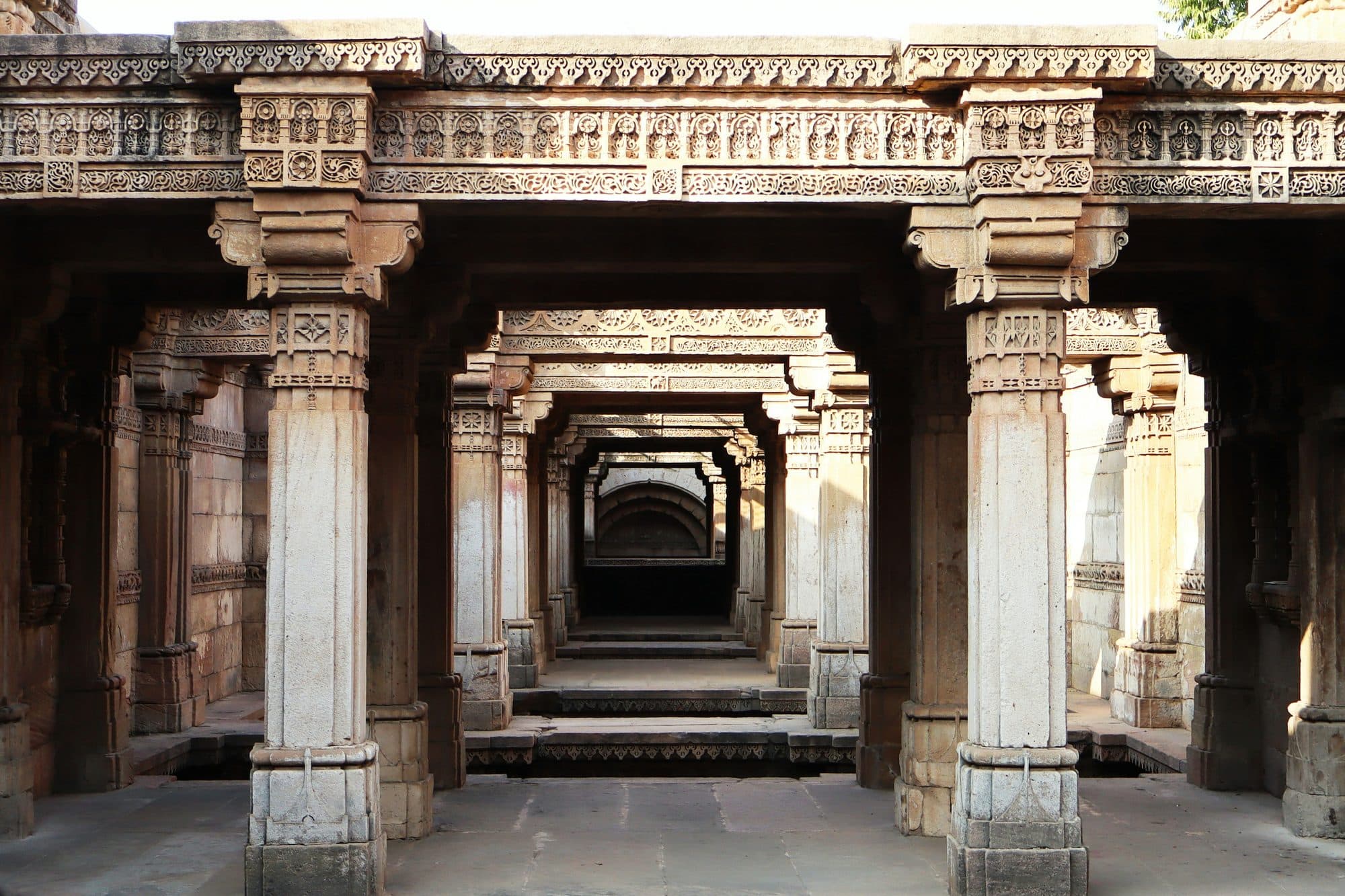
Gujarat's largest city: a walled old town of pols, mosques and temples, Gandhi's Sabarmati Ashram, and stepwells within a day's drive.
Best: Nov–Feb
Gujarat
One of the Char Dham
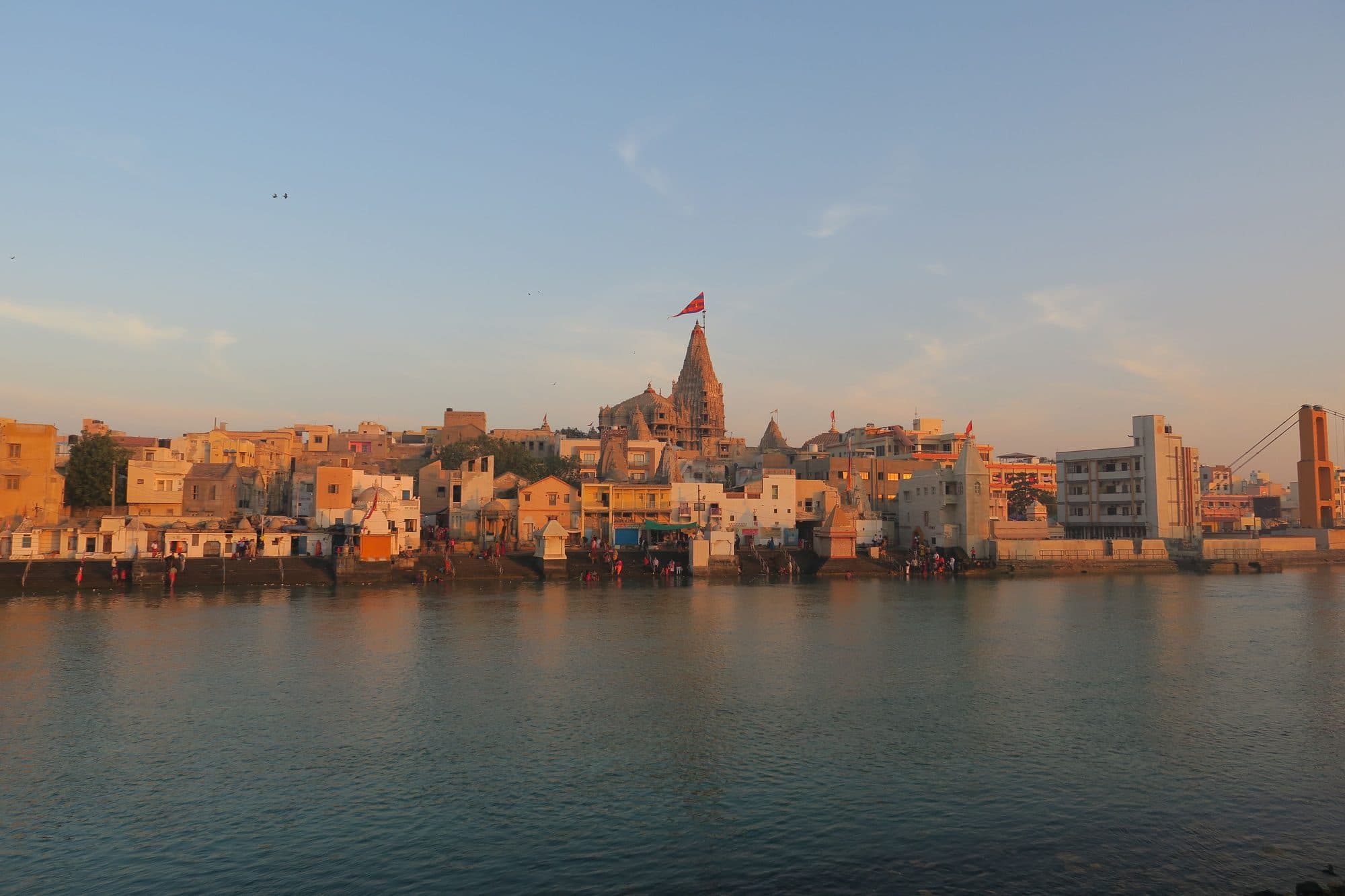
Krishna's city on the Arabian Sea and one of the Char Dham, with the Dwarkadhish temple, Gomti Ghat, Bet Dwarka and Nageshwar.
Best: Nov–Feb
Share your dates, who's travelling and what you'd love to see. We'll reply with a day-by-day plan and an itemised quote — no obligation.