Before you fly: visa, insurance and packing
Visa. Most visitors need a visa, and many nationalities can apply for an e-Visa online before they travel. Apply only on the official e-Visa site run by the Government of India: lookalike sites charge extra for the same form, and some of them look official. Check there whether your nationality is eligible, which arrival airports accept e-Visas and how far ahead to apply. Your passport usually needs at least six months' validity from the date you arrive and two blank pages. Keep the approval on your phone and a printed copy in your bag.
Insurance and health. Buy travel insurance that covers medical treatment, and read what it says about activities such as safaris. See a travel doctor or clinic well before you go about vaccinations and medicines; the advice depends on you and your route. Bring any prescription medicines in their original packaging, with a copy of the prescription.
Drones. Don't pack a drone without checking India's current drone rules first. Flying near monuments, airports and other sensitive areas is prohibited, and the rules on bringing one into the country are strict.
What to pack
- Light, loose cotton clothes that cover your shoulders and knees, for the heat and for temples.
- A scarf or shawl, for covering your head or shoulders at religious sites and for sun and dust.
- Shoes that slip on and off easily, since you'll take them off at every temple.
- A warm layer from November to February, when nights in the north and in the desert can be cold.
- Sunscreen, a hat and sunglasses, whatever the month.
- A plug adaptor: India uses type C, D and M sockets at 230 volts.
Money, cards and staying connected
- Cards are accepted at most hotels, larger restaurants and bigger shops. Tell your bank you're travelling, and carry a second card in case one is declined.
- Cash still matters for small things: tea stalls, markets, auto-rickshaws (three-wheeled taxis), tips and temple donations. Keep small notes, because change can be short.
- ATMs are common in cities and towns. Use machines inside banks or hotels where you can, in daylight, and expect a limit on each withdrawal.
- Changing money: use banks, authorised money changers or airport counters, and keep the receipts.
- UPI, India's QR-code payment system, is used everywhere from shops to street stalls, but it is built around Indian bank accounts. Some services now offer visitors prepaid UPI wallets, but what works with foreign cards and phone numbers varies, so don't rely on it as your only way to pay.
- SIM cards: a local SIM usually needs your passport and visa, a local address such as your hotel and sometimes a photo. Counters at the main international airports are the easiest place to buy one, and activation can take a few hours or longer. An international eSIM or a roaming plan is simpler for a short trip.
- Wi-Fi is standard in most hotels, though speeds vary. Mobile coverage is generally good along the highways, with gaps in remote areas.
Dress and etiquette at temples, mosques and monuments
Hotels and city cafés are relaxed about what you wear, but religious sites have rules, and dressing for them makes the day easier.
- Cover shoulders and knees at temples, mosques, gurdwaras (Sikh temples) and dargahs (Sufi shrines). Loose trousers or a long skirt with a scarf works everywhere.
- Take your shoes off before entering a temple, mosque or gurdwara, and often a home. Socks help on hot stone floors where they're allowed.
- Cover your head at gurdwaras, such as Bangla Sahib in Delhi, and at dargahs. Scarves are usually available at the entrance.
- Leave leather behind at some Jain temples, such as Ranakpur, which don't allow leather items inside.
- Photography is restricted inside many temples and some monuments and museums, and some sites charge a camera fee. Follow the signs.
- Ask before photographing people, especially women, and in villages. Many will happily say yes; some will say no, and some may ask for money.
- Small courtesies: use your right hand to give, receive and eat, keep public affection low-key, and greet people with a namaste, palms pressed together.
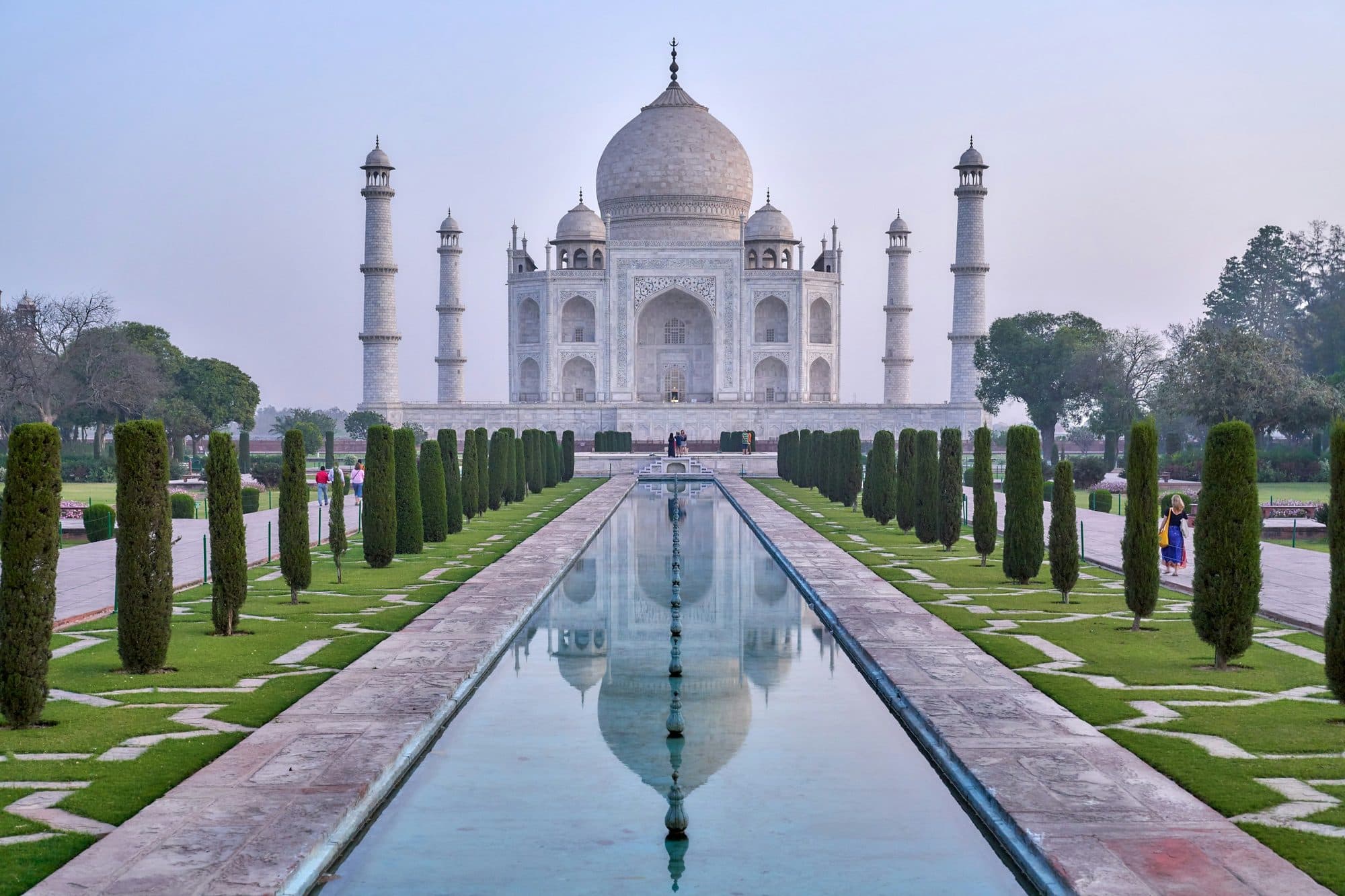
Security at the Taj Mahal and other big monuments is strict, and what you can carry in is limited: food, tobacco and tripods aren't allowed, and big bags slow down the security check. Travel light on those days.
Food and water
- Water: drink bottled water with an unbroken seal, or the filtered water your hotel provides, and use it for brushing your teeth too if you want to be careful.
- Freshly cooked, hot food is the safest choice. Busy places with a quick turnover beat quiet ones, and food cooked in front of you beats food that has been sitting.
- Go easy at first on raw salads, fruit you didn't peel yourself and ice of unknown origin.
- Vegetarian food is excellent and everywhere. Try dal baati churma in Rajasthan (lentils with baked wheat dumplings and a sweet crumble) and a Gujarati thali, a platter of many small dishes.
- Spice: ask for less spicy food (kam teekha in Hindi); kitchens can usually adjust.
- Alcohol is sold in Delhi and most of Rajasthan, but Gujarat restricts it (see our Gujarat tour plan), holy towns such as Pushkar don't serve alcohol or meat, and on some public holidays alcohol isn't sold at all.
Your car, your driver and the pace of the trip
A private car and driver is the most comfortable way to travel between the cities of the Golden Triangle, Rajasthan and Gujarat, and it means you set the pace of each day.
What your driver does, and doesn't do
- Drives you between cities and around each town, waits while you sightsee and helps with luggage at hotels.
- Knows the roads, the parking and the entry points, and can suggest a clean place for lunch.
- Isn't a guide inside the monuments. At the major sights, licensed local guides can be arranged instead.
- Goes where you want to go. If you'd rather skip shops and emporiums, say so at the start.
Your driver's meals and overnight stays are arranged, so you don't need to plan for them. Agree the next day's start time each evening, keep long drives to daylight, and wear your seat belt in the back too. If anything gets lost in translation, call us: the team speaks English and Hindi.
Tipping is customary in India but not compulsory. If you're happy with the service, tip your driver at the end of the trip and your guide at the end of each tour, in cash and directly to them. Small tips for hotel porters, and for restaurant staff where service isn't added to the bill, are also usual.
The pace
Distances are bigger than they look on a map, and the roads mix expressways with trucks, tractors, cows and the occasional camel. A good first trip spends two nights in most places, starts early to beat the heat and the crowds, keeps the arrival day light and, on anything longer than ten days, includes a day with nothing planned.
| Drive | Distance | Usual time |
|---|---|---|
| Delhi – Agra | about 230 km | 3½–4½ hours |
| Agra – Jaipur | about 240 km | 4–5 hours, plus stops |
| Jaipur – Delhi | about 280 km | 4½–6 hours |
| Jaipur – Udaipur | about 400 km | 6–7 hours |
For routes that work at this pace, see our Golden Triangle itinerary and Rajasthan itinerary guides.
Staying safe and avoiding touts
Travelling in India takes a little street sense, as anywhere busy does. At the big sights, the usual nuisance is touts rather than danger.
- Book through your hotel or us, and use official counters: prepaid taxi booths at airports, and the official ticket counters or websites for monuments and trains.
- Ignore anyone who says a monument is closed and offers to take you somewhere else instead. Check with your driver or hotel.
- Licensed guides carry an ID card. Ask to see it, or let us or your hotel arrange a guide.
- Walk away from any business offer involving gems or jewellery to carry home and resell. It is a well-known scam.
- Keep valuables in the hotel safe, carry copies of your passport and visa, and keep an eye on your bag in crowded markets and stations.
- Emergency numbers: 112 is India's national emergency number, and the Ministry of Tourism runs a toll-free, 24-hour multilingual tourist helpline on 1800-11-1363.
For women travellers
Plenty of women travel in India alone or together, and a few habits make it easier. Loose clothes that cover shoulders and knees suit the heat and the temples, and draw less attention in small towns. After dark, use your car or hotel-arranged transport rather than hailing a ride, and sit in the back. Share your plans with someone at home, and be clear and firm if attention is unwanted; a loud no works. The Delhi Metro keeps a coach on every train for women.
Weather by season, and closures to know
| Season | Months | What to expect |
|---|---|---|
| Cool and dry | October to March | The main touring season: warm days and cool nights. December and January nights can be cold, especially in the desert, and morning fog around Delhi and Agra sometimes delays flights and trains. |
| Hot | April to June | Hot and dry, often above 40°C in May and June. Sightsee early and late, and rest in the middle of the day. |
| Monsoon | Late June to September | Humid, with heavy showers on some days and much less rain in the western desert. The hills around Udaipur turn green, and some wildlife parks close. |
The Taj Mahal usually opens for a limited number of night visits on the full-moon night and the two nights either side, except on Fridays and during Ramzan; tickets are few and go in advance. Festivals such as Diwali (October or November) and Holi (usually March) are worth seeing, but trains, flights and hotels fill up, and the dates change every year. Delhi's air is often poor from about November to January; if you're sensitive to it, keep your Delhi days short and check the daily air-quality index.
Help planning your first trip
If you'd like help turning these tips into a route, get a quote for a private tour with a car and driver, or start from our Golden Triangle, Golden Triangle with Udaipur and Classic Rajasthan sample itineraries. See also our page for international travellers.